Most people picture a portable power station as an emergency box for outages. That picture sells the EcoFlow DELTA 3 Max short in nearly every way. This unit can run a workshop saw, a campsite fridge, or a home office. It also recharges fast enough to fit around a busy day instead of dictating it. Understanding where it shines, and where it falls short, helps you buy for real needs.
This review walks through the specs, charging options, runtime, and expansion path in plain terms. Each number comes from EcoFlow’s published specifications, and estimates are clearly labeled as estimates. Prices change often, so the focus stays on what the unit does rather than what it costs today. That approach keeps the review useful long after the next sale or the next model arrives.
A Portable Power Station Built for More Than Outages
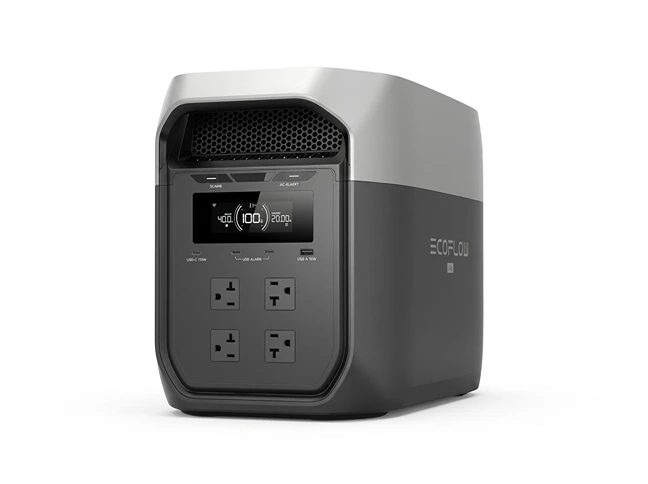
The DELTA 3 Max stores 2,048 watt hours in a lithium iron phosphate battery, often called LFP. Retailer spec sheets list about 3,000 cycles before capacity drops to 80 percent. Four AC outlets share 2,400 watts of continuous output, with each port rated up to 20 amps. USB-A and USB-C ports handle phones, tablets, and laptops without using an AC outlet. The unit weighs about 44.8 pounds, so moving it is a two-handed job.
Specifications from EcoFlow and authorized retailers. Charging times reflect manufacturer test conditions.
Those numbers place the DELTA 3 Max in the upper middle of the portable power station market. It holds twice the energy of 1kWh units, yet one person can still move it. Larger home backup systems store more, but they weigh and cost considerably more. For many households, that capacity covers a full day of essentials without a recharge.
Flexibility is the real selling point, because one unit can serve several roles in a single week. It can back up a home office during a storm, then ride along on a camping trip. Later, it can power tools in a detached garage that has no wired outlets. Few devices cover that range without adapters, extra purchases, or a fuel can.
Several Ways to Refill the Battery
Wall charging is the headline feature, since EcoFlow lists 0 to 80 percent in about 68 minutes. That speed comes from an 1,800 watt AC input, which pulls hard from a standard outlet. Manufacturer figures reflect ideal conditions, so real charging may run a little longer at home. Even so, an hour of grid power or generator time can restore most of the battery. That matters most when a generator is your only charging source during a long outage. Shorter run times mean less fuel burned, less noise, and less time standing guard.
Solar is the second option, with a 500 watt input for portable or fixed panels. EcoFlow lists 0 to 80 percent in about 3.4 hours under strong sun with enough panels. Vehicle charging is also possible through EcoFlow’s alternator charger accessory for faster refills on the road. Solar input is the slowest path, so it works best as a daily top-off.
Generators offer another path, along with combined inputs from several sources. EcoFlow’s Smart Generator 4000 can recharge the DELTA 3 Max during storms and long outages. Check generator compatibility with EcoFlow before buying, since output and plug types vary by model. Having several refill paths means the station rarely sits empty for long, whatever the weather.
Output for Nearly Every Household Device
At 2,400 watts of continuous output, the DELTA 3 Max handles most household appliances and many power tools. X-Boost extends that reach by running some resistive appliances up to 3,400 watts at reduced voltage. That works for kettles or hair dryers, though they may run a little slower or cooler. Motors need extra care, so check their startup draw against the station’s limits first. Check the label on any appliance before plugging it in to confirm its wattage.
Runtime depends on how much power each device draws over time. A simple Energy.gov appliance formula multiplies watts by daily hours, then divides by 1,000. Applied to the DELTA 3 Max, roughly 1,740 usable watt hours remain after an estimated 15 percent inverter loss. The table uses that figure, so treat each runtime as a planning estimate, not a test result. Your own devices may draw more or less, so a plug-in meter gives the best answer.
Estimates assume about 1,740 usable watt hours after inverter losses. Example draws are typical figures, so check your own devices with a plug-in meter. Refrigerator and freezer figures are averaged over compressor cycling.
Backup That Switches Over in Milliseconds
The DELTA 3 Max can act as an uninterruptible power supply for equipment that cannot lose power. EcoFlow lists a switchover time under 10 milliseconds when grid power drops. That speed keeps most desktops, modems, and network gear running through a sudden outage. For home offices, that protection can prevent lost work when the grid flickers during storms. Some sensitive equipment needs faster protection, so check its requirements before trusting it to any backup.
The EcoFlow app adds remote monitoring, energy-saving modes, and firmware updates over Wi-Fi or Bluetooth. Some of those features rely on an internet connection, so plan for the station working without them. The core backup function works locally, switching to battery whether or not the app is connected. Keep the unit plugged in and charged, and it will stand guard without daily attention.
Solar Charging Away From the Grid
Solar turns this portable power station into one that refills itself without fuel or an outlet. Panel wattage matters, because a 500 watt input only fills quickly when the array can supply it. A smaller 200 watt panel still works, but a full refill may take two or more sunny days. Matching panels to the input limit gives you the fastest and most predictable results.
Seasons change the math, since winter sun delivers far less energy than summer sun. Solar design guidance from Penn State’s sizing course recommends planning around the critical month. That month pairs the weakest sunlight with the heaviest power demand of the year. Size your panels for that month, and the rest of the year takes care of itself.
A station like this works best as one layer inside a larger plan. Main batteries carry daily loads, while the DELTA 3 Max moves to wherever power is needed. A full breakdown of that layered approach appears in this off-grid power plan guide. Treat solar as the daily refill, and treat a generator as insurance for cloudy weeks.
When 2k Wh Is Not Enough
EcoFlow advertises battery expansion for the DELTA 3 Max Plus, not for the standard DELTA 3 Max. Confirm compatibility with EcoFlow before buying if you expect your storage needs to grow. The Max Plus adds expandable capacity, with extra batteries pushing total storage toward 10 kilowatt hours. That flexibility costs more upfront, so it suits buyers planning a larger system from the start.
For many households, 2,048 watt hours already covers a full day of essential loads. A freezer, router, laptop, and lights together often use less than that in a day. Run your load list through the runtime table before deciding you need more storage. The base capacity may prove enough once you measure real usage.
A second station is another path, and it offers a different kind of protection. Two separate units mean one can keep working if the other needs repair. An extra battery, by contrast, adds runtime but leaves a single inverter as the weak point. Budget, space, and how critical your loads are should decide which path fits.
Camping, Workshop, and Home Uses
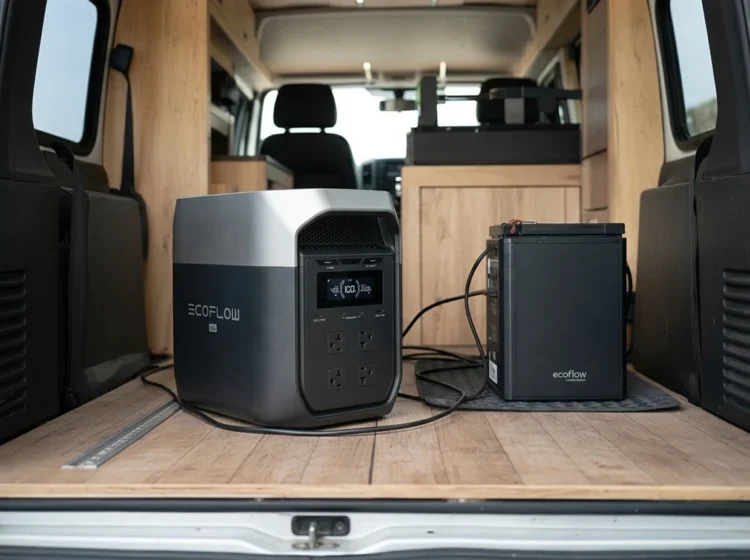
Outdoors, the DELTA 3 Max can run a portable fridge, lights, fans, and charging gear from one box. Its quiet battery operation suits tents, cabins, and campgrounds where engines are unwelcome. At about 44.8 pounds, it rides better in a truck bed or van than in a backpack. RV owners can use it for overnight loads without running an engine in a campground. In a workshop, it powers drills, chargers, and small saws without a cord running to the house. At home, it covers outages, home offices, and medical devices that need steady power.
A battery station also avoids the dangers that come with small gas generators. Federal CDC generator safety guidance places generators at least 20 feet from doors, windows, and vents. A battery station has no exhaust, so it can sit safely indoors beside your gear. That alone makes it the better choice for apartments, cabins, and late-night use.
Portable Power Station Value Over Time
Judging value takes simple arithmetic rather than a glance at the price tag. Multiply 2,048 watt hours by about 3,000 rated cycles, and you get roughly 6,000 kilowatt hours of lifetime energy. Divide the price by that figure to estimate your cost per kilowatt hour delivered. Compare that number across stations, and the cheapest box is not always the best value. Real use will land lower, but the method shows where your money actually goes.
EcoFlow lists a three-year warranty, extended by two years when you register in the app. Compared with a gas generator, the station skips fuel, oil changes, and engine repairs entirely. Once solar panels are in place, each recharge costs nothing beyond the initial investment. Over several years, that difference can outweigh a higher purchase price.
Power Station
EcoFlow DELTA 3 Max
2048Wh LFP Portable Power Station, 2400W Output
A 2048Wh LFP battery and 2400W output keep a freezer, router, and laptops running when the main bank needs a break. It recharges from 0 to 80% in about 68 minutes and accepts solar input.
As an affiliate, we may earn a commission from qualifying purchases
One Station, Many Jobs
The DELTA 3 Max is not perfect, and it helps to know its limits before buying. Its 2,048 watt hour base runs out faster under heavy heating or cooking loads. It also lacks the capacity to run central air or an electric water heater. At about 44.8 pounds, it is portable but not something you will carry far for fun. Buyers who expect to expand storage later should compare it with the Max Plus first.
For most households, though, those tradeoffs are reasonable for what the unit delivers. It reaches 80 percent in about an hour, switches over in milliseconds, and runs most household devices. The EcoFlow app adds remote monitoring, and a local control dashboard can complement it at home. That combination lets you watch your power use without guessing what remains in the battery.
Buy it for the jobs you actually have, not the ones a spec sheet suggests. List your devices, estimate their hours, and compare the total with the runtime table above. If the numbers fit, the DELTA 3 Max earns its place as a flexible portable power station. If they fall short, look at a larger or expandable model before the first outage arrives.