Most people do not realize how useless their off grid power systems really are until they hit the first real multi‑day outage. The city mindset says a cheap generator, a couple of dusty batteries, and a mess of extension cords will somehow keep everything running. Out in the sticks or living full‑time on the road, that same setup feels less like a plan and more like a bad joke that just happens to burn fuel and make noise.
My wake‑up call was a long outage that turned my supposedly smart backup system into a stress machine. I watched food creep toward spoilage, juggled which devices got to live on borrowed battery time, and listened to my generator chew through fuel I could not easily replace. That experience pushed me toward people actually living off grid, building real systems instead of crossing their fingers and hoping the grid would come back before the freezer thawed.
Why city backup thinking does not survive off grid
Homesteaders and full-time travelers don’t have the luxury of pretending power is optional. For them, electricity sits right next to water and food on the priority list. A real plan has to keep the well pump running and chest freezers cold. It must keep fans moving air and lights working. Some setups even need to keep medical gear running, without assuming the grid will feel like helping tomorrow. That is a very different problem than ‘keep Wi-Fi and one lamp alive until the utility truck shows up.
Once you push past that first romantic idea of ‘I’ll just run a generator,’ the weak links start glowing like hazard lights. Lead-acid batteries take forever to charge and punish you for deep cycles. Bargain inverters throw a fit every time a fridge compressor kicks on. Generators drink more fuel than you can realistically store. All of it looks fine in a marketing photo. In a real three-day storm, you suddenly understand why people call those off grid power systems a waste of money and space.
That is why serious off‑grid folks treat portable power station gear as one tool in the box, not the entire strategy. A modern station with good lithium cells, a built‑in inverter, and solar input gives you this movable chunk of power you can drop in the van, the workshop, or the house as needed. If you want to see how that looks in a concrete product, my Delta 2 breakdown walks through one example of a station that made my old lead‑acid setup feel like I had been carrying around a boat anchor for no good reason.
The real backbone: solar, batteries, inverter, and generator
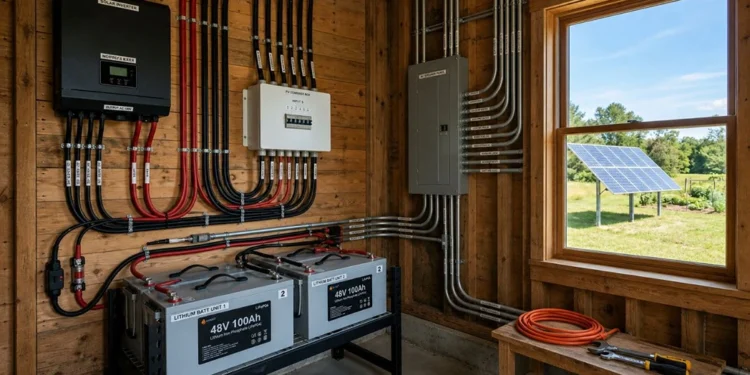
Underneath all the specific brands and YouTube builds, most reliable homestead off grid power systems share the same backbone: solar panels, a charge controller, a battery bank, a solid inverter, and a backup generator. A good off grid solar guide breaks down how those pieces fit together for homesteads and cabins instead of just grid‑tied rooftops, but you really understand it when you watch your own system ride out an ugly weather week.
Solar’s job is boring in the best way possible: quietly refill the batteries every day, even in your worst sun month. That is why smart designers start with daily kilowatt‑hour use and winter sun hours instead of whatever panel kit happens to be on sale. A solid solar sizing steps walkthrough shows how quickly “just a fridge and a pump” becomes a multi‑kilowatt‑hour reality once you actually measure usage and assume clouds, not bluebird skies.
The battery bank is where your system’s personality really shows. When I first started, I had the standard pile of lead-acid that everybody swore was ‘good enough.’ They worked, until cold mornings, partial charging, and deeper cycles piled up. Voltage sagged, capacity slipped, and I found myself babying the bank like a fragile pet. Switching to an LFP-based setup felt like a cheat code, since it shares chemistry with a lot of newer stations. Suddenly I could discharge deeper and recharge harder without worry. I stopped obsessing over every cycle, because the thing was built to be used, not admired.
Where portable stations plug into real systems
Inverters and generators are the muscle and the bruiser. A pure sine inverter has real surge overhead. It lets your fridge, well pump, and tools start up. It won’t slap the lights off when the compressor rolls. Cheap inverters turn a homestead into a circus of random reboots. Spend more here. It just hums in the background. The generator is the blunt instrument. You drag it out when the sky stays uncooperative for days. You run it hard. It shoves bulk charge into the batteries. Then you shut it up and go back to quiet solar.
This is where a good station earns its keep. Instead of plugging sensitive stuff straight into a noisy generator, I will often use the generator as a dumb engine whose only job is to top off a portable power station. Once that is charged, the station moves inside and becomes a clean, quiet source for networking, laptops, or a small fridge while everything else rides on the main battery bank. It is the difference between screaming over a motor all evening and forgetting where you left the box because it makes so little fuss when it is working.
People living on the road have been refining that approach for a while. A solid portable power setup guide walks through how portable power stations carry fridges, fans, and work gear without you having to wire an RV like a miniature house. Another good read is the van life setup story, where a full‑time worker explains how they mixed solar, an inverter, batteries, and a station to cover both work and play. The punchline is always the same: the station is not “the whole system,” but it is a ridiculously useful Swiss army knife inside that system.
Designing off grid power systems around actual loads
The unglamorous part of all this is the math and the honesty. You cannot design a reliable setup around vibes and wishful thinking. Instead, sit down with a notepad or a spreadsheet and list everything that uses power: well pump, fridge, freezer, lights, fans, router, chargers, tools, maybe a TV. Multiply each item’s watt draw by its runtime, and you get a real daily number staring back at you. That is the moment most people realize their “tiny” loads are not tiny at all.
When you build around those honest numbers, the gear stories stop sounding like ad copy. Whether it is a rack of LFP batteries, a quiet inverter, or a portable station like the one in my Delta 2 breakdown, it starts sounding like survival notes. You know why fast charging matters, because you have stood next to a generator at midnight hoping it finishes before your neighbors hate you. Better battery chemistry matters too, since you have watched cheap batteries fade after one hard winter. External references like that off grid solar guide and those solar sizing steps are worth bookmarking. They help you design an off grid power system that feels boringly reliable instead of excitingly fragile.
When you reach that point, power stops being the loudest character in your off‑grid story. The system just works. Panels quietly refill the batteries every day. Batteries carry you through the night without drama. Generators only show up when the weather turns hard against you for days at a time. Portable stations slide around to wherever the pressure is highest that week. Your off grid power is no longer a science project or a fire drill.
It is part of the background, which is exactly where something that important belongs. The next time the grid blinks or you are miles from the nearest utility pole, you are not scrambling. You are just flipping the same switches you always do, because you built the system to live with, not to fear.