You unlock the door to a rental, drop your bags, and start to relax. Nothing in the room looks out of place, and that is exactly the problem. A camera smaller than a pencil eraser can hide inside a smoke detector, a phone charger, or a clock on the nightstand. A tracker the size of a coin can ride under your car for weeks without you ever noticing it.
These devices cost less than a dinner out, and many are sold openly online. Most victims never find out they were watched or followed, because nothing ever tells them. A hidden camera detector gives you a way to check a room or a vehicle yourself in minutes. Instead of hoping everything is fine, you can actually confirm it.
Phone Alerts Leave Dangerous Gaps
Smartphones now offer some protection against unwanted trackers, and it is worth understanding how it works. According to Apple’s tracking alert guide, an iPhone shows an alert when an AirTag separated from its owner is seen moving with you over time. That last part matters. The alert depends on time and movement, so a short drive home may end before any warning appears.
Those alerts also only cover Bluetooth trackers built to work with phone networks like Find My. Dedicated GPS trackers that report location over cellular networks do not trigger them at all. Many of these trackers attach with a strong magnet and run for weeks on a single charge. Your phone simply has no way to hear them, no matter how long they travel with you.
Hidden cameras sit completely outside these alert systems. No phone will warn you that a lens is pointed at your bed or your shower. The AirTag security risks most people hear about represent only one piece of the problem. A full picture requires a tool that looks for the devices themselves rather than waiting for a notification that may never come.
Where Hidden Cameras Turn Up
Short-term rentals and hotel rooms are the most common places people worry about, and the concern is reasonable. Reports of vacation rental spy cameras surface regularly, often discovered only by chance. Some hosts openly use doorbell or exterior cameras, which is very different from a lens hidden indoors where guests expect privacy.
Hidden cameras favor objects that already belong in a room and already have power. Smoke detectors, USB chargers, alarm clocks, air purifiers, and picture frames are all common disguises. Anything plugged into a wall or aimed at a bed, shower, or seating area deserves a closer look. Small holes in odd places, such as the side of a tissue box, are another warning sign.
Changing rooms, office spaces, and even your own home can be targets too. A former partner, a roommate, or a contractor with temporary access could leave a device behind. That is what makes this problem so unsettling. The people most at risk are often the least likely to suspect anything until long after the recording has started.
How a Hidden Camera Detector Works
Most consumer detectors combine a few simple methods in one handheld device. RF detection listens for radio signals from devices that transmit, such as wireless cameras, cellular trackers, and audio bugs. A lens finder shines LED lights so that a hidden camera lens reflects a bright point back at you. Magnetic detection senses the strong magnets used to stick trackers under vehicles.
One detailed teardown of a common budget detector shows how simple the hardware inside can be, pairing an RF sensor with a basic magnetic sensor and an LED readout. Simple does not mean useless. Used patiently, these methods can narrow a search from an entire room down to a single object worth taking apart.
Know What a Detector Can Miss
No hidden camera detector catches everything, and buyers should understand why. RF mode only finds devices that are actively transmitting. A camera that records to a memory card without sending a signal will stay silent, and so will a tracker that is asleep between updates. That is why the lens finder and magnetic modes matter as much as the signal meter.
False alarms are the other challenge. Wi-Fi routers, smart speakers, and your own phone all give off radio signals that can set off RF mode. Turn off your phone and nearby wireless devices before a sweep, then lower the sensitivity as you get closer to a signal. Treat every alert as a clue to investigate, not as proof that something is there.
The KAXYUYA Anti Spy Detector Up Close
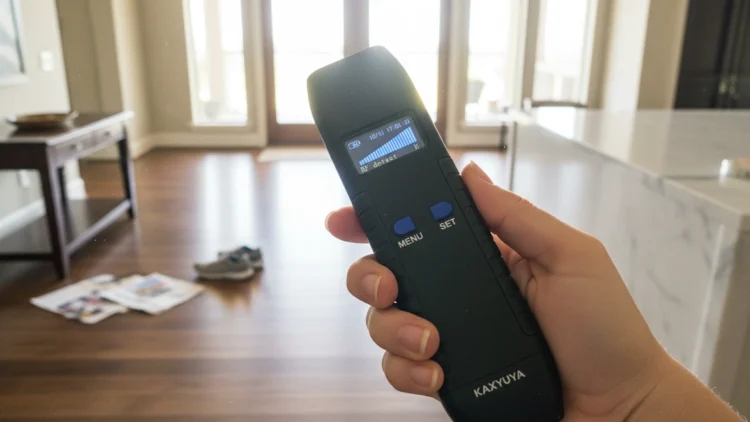
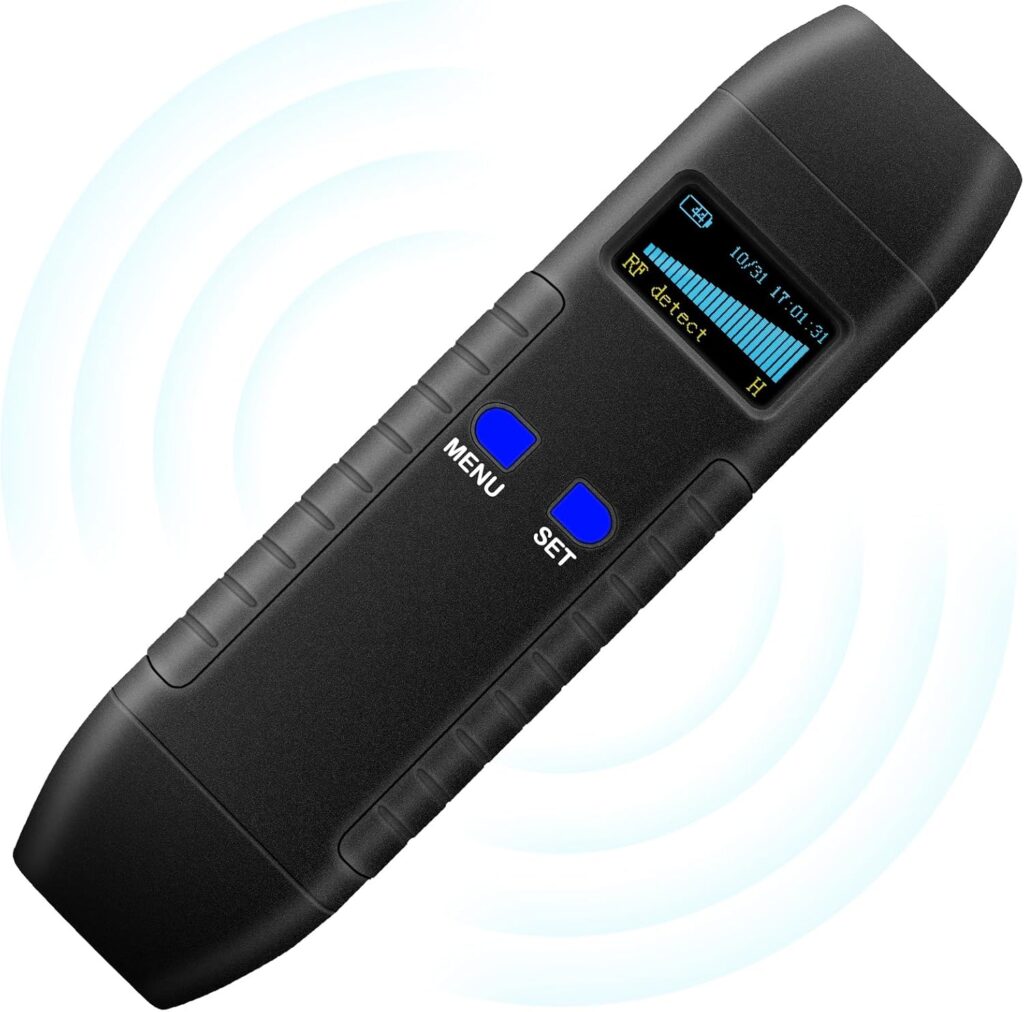
The KAXYUYA Anti Spy Detector packs seven detection modes into a compact, rechargeable handheld unit. It combines RF signal detection for wireless cameras and trackers, magnetic field detection for vehicle trackers, and LED lens scanning for hidden cameras. A display shows signal strength as you move, so you can follow a reading toward its source instead of guessing.
Alerts come through both a buzzer and vibration, and the vibration option lets you sweep a room quietly. Adjustable sensitivity helps you filter out background signals from routers and appliances, which makes a real difference in apartment buildings and hotels. The unit is small enough to pack in a carry-on or keep in a glove box, so it is ready when you arrive somewhere new.
On Amazon, it sells for about $171 directly from KAXYUYA and carries a 4.1-star rating. That price sits above the cheapest detectors, but you get a display and multiple detection modes instead of a single blinking light. For frequent travelers, rideshare drivers, or anyone worried about being followed, it offers a practical way to check spaces without hiring a professional.
Hidden Camera-GPS Detector
KAXYUYA Anti Spy Detector
7-Mode RF Bug and Hidden Camera Finder
This portable sweeper uses seven detection modes to find hidden trackers, cameras, and listening devices. LED lens scanning and vibration alerts help you check a car, hotel room, or rental in minutes.
As an affiliate, we may earn a commission from qualifying purchases.
Checking Your Car for Hidden GPS Trackers
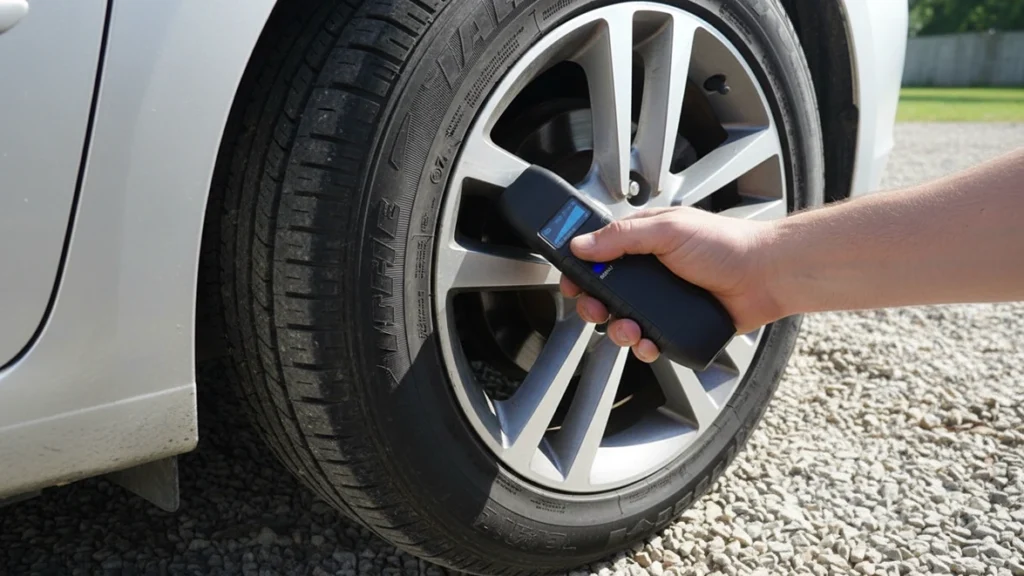
Vehicle trackers are usually hidden where someone can reach quickly without being seen. Wheel wells, the inside of bumpers, and the frame underneath the car are common spots because magnetic trackers stick to bare metal. Switch the detector to magnetic mode and move it slowly along each of these areas. A strong reading in an unexpected place is your cue to look closer with a flashlight.
Check the inside of the car next. Some trackers plug into the diagnostic port under the dashboard, where they draw power from the vehicle and never need charging. Look under the seats, inside the trunk lining, and around the spare tire as well. Then switch to RF mode with your phone turned off and drive a short distance, since many trackers transmit only while moving.
If you find a device, resist the urge to throw it away immediately. Take photos of it and where it was attached, then contact local law enforcement, especially if you suspect someone is stalking you. A tracker can be evidence, and removing it may alert whoever placed it. Your safety comes first, so make a plan before you act.
How to Sweep a Hotel Room or Rental
Start by turning off the lights and closing the curtains. Use the LED lens finder and look through its viewer while slowly scanning the room, paying close attention to smoke detectors, clocks, chargers, and anything facing the bed or bathroom. A camera lens will reflect back as a small, bright point of light. Take your time, because a rushed sweep is easy to fool.
Next, switch to RF mode with your phone and laptop turned off. Walk the room slowly and watch for a reading that grows stronger near a specific object. Unplug suspicious devices and inspect them up close. If you find a hidden camera in a rental, document it, leave if you feel unsafe, and report it to the booking platform and local police.
Trust Your Gear, but Check the Room
The tools used to watch people keep getting smaller, cheaper, and easier to buy. Phone alerts help, but they were never built to catch every tracker or any hidden camera at all. A dedicated detector closes that gap by looking for the devices directly. Physical checks like these belong alongside the steps you take to protect your online accounts and keep your digital life private.
Privacy now depends on habits as much as hardware. A five-minute sweep when you arrive somewhere new costs almost nothing, and it can reveal what you would otherwise never see. Combined with modern data protection habits at home and online, it puts control back in your hands instead of leaving it with whoever was watching.