Most people treat the beige box from the cable company like a permanent fixture of their home, something as immovable as a water heater or a fuse box. That plastic brick is not a utility. It is a financial arrangement that benefits the provider far more than it benefits you, and most consumers never stop to question it.
I never rented from my ISP. From the start I chose my own hardware, driven by three things: the performance ceiling rental equipment imposes, the privacy exposure that comes with using provider controlled hardware, and the straightforward math of paying monthly for something I could own outright. That decision has compounded in value every year since. Every month without a rental fee is money that stayed in my pocket, and every device on my network has operated behind a layer of privacy the ISP rental model was specifically designed to prevent.
The Financial Scam and the Privacy Trap
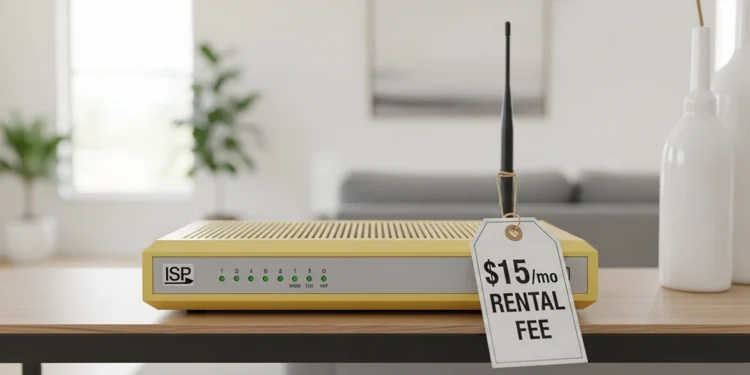
Buried in the fine print of the monthly bill is a rental fee that usually hovers around fifteen dollars. That fee effectively punishes loyalty. Paying a premium for hardware that was obsolete the day the technician pulled it out of the van is not a service. It is a recurring charge most customers never think to challenge.
Paying a small monthly fee sounds cheap until the math adds up over a two year contract. That equals three hundred sixty dollars spent on equipment that costs the ISP a fraction of that to procure. It is like leasing a worn out vehicle for the price of something far better and never actually owning it.
The money is frustrating but the control problem runs deeper. When the router belongs to the ISP, they have a direct view into the traffic moving across your network. ISPs use this access to apply bandwidth throttling when they detect high usage activity like 4K streaming or large file transfers. They can see exactly what is happening on the network because their equipment sits at the center of it. The rental router is the bottleneck that lets them manage their infrastructure at the customer’s expense. You can check the latest net neutrality reports to understand just how often these companies have been caught slowing down users who stream or transfer too much.
This is not paranoia. It is a documented business model. Multiple consumer watchdogs have released reports on bad ISP equipment proving these rental units are underpowered and designed to give the provider maximum network visibility at minimum cost to them. They profit when customers accept the bare minimum while paying a premium for it.
Hardware That Breaks the Cycle
Breaking the cycle starts with buying your own gear. The ASUS RT-BE88U represents the actual performance level you are paying for but not getting through provider supplied hardware. Wi-Fi 7 technology handles the growing number of connected devices in a modern home without the congestion that brings rental hardware to its knees. The 10 Gbps ports mean the router is no longer the weak point between the wall and the devices depending on it. You finally get the raw speed from the connection to your devices without the ISP filter slowing it down.
Standard rental units cut corners on antenna design because providers assume most customers will not notice until they are locked into a service contract. Dead spots in back bedrooms or the garage are a predictable result of that approach. The RT-BE88U uses four external antennas and Multi-Link Operation to maintain a stable signal through walls and across larger floor plans. This creates a connection that does not drop when you walk to the kitchen. The latency improvement for gaming or video calls is not subtle. If you have a larger home, this is the difference between a connection that works and one that constantly buffers.
Going Invisible with Whole Home VPN
The biggest practical win from owning the router is what it makes possible at the network level. ISP provided hardware almost never supports VPN configuration because giving customers that capability works directly against provider data visibility.
My Asus router runs VPN coverage across the entire home network. Every device connected to that network operates behind encrypted traffic without a separate app on each phone, tablet, game console, or smart home device. The ISP cannot throttle what they cannot see, and they cannot see anything once VPN coverage operates at the router level rather than the application level. This stops the monitoring at the source without needing to install anything on individual devices across the home.
This eliminates the per device VPN subscription that most households pay because they have no other option when using provider hardware. One configuration covers everything. Smart home devices that have no native VPN capability get the same protection as a laptop running full security software.
For homeowners who want a solution built specifically around whole home VPN coverage with a dedicated privacy focus, the Aircove AX1800 delivers that same router level approach in hardware optimized for that specific function. The principle is identical to what the Asus setup delivers, with an interface designed to make whole home privacy management straightforward for any household regardless of technical background.
Security That Costs Nothing Extra
Security usually costs extra with ISP provided hardware or requires a separate subscription service. The RT-BE88U includes AiProtection Pro at no additional cost. It is a commercial grade security suite powered by Trend Micro that blocks malicious sites before they reach any device on the network. That protection extends automatically to every connected device, including hardware that has no native security capability of its own. It actively neutralizes threats that the ISP router would likely let straight through.
The Real Cost of Ownership
Investing in a quality router pays for itself well within two years. The rental fees disappear, the performance increases, and the provider visibility into your traffic stops. It is the only way to truly own the connection you are already paying for monthly.
The other trap with ISP gear is that providers rarely upgrade it unless the customer complains loudly enough to force a service call. A household paying for a modern fiber plan could be running that connection through Wi-Fi 5 hardware the provider installed years earlier and never replaced. Owning the router means owning the upgrade decision. When the wireless standard advances, the change happens on a timeline that serves the household, not whenever the provider decides the operational cost of a truck roll is worth it.
Buying your own gear forces the ISP to become what they should always have been: a pipe that delivers data and nothing more. The subscription free approach to home technology starts at the network level. Everything else, the cameras, the automation, the software running on every screen in the home, depends on a network the homeowner controls completely. Without that foundation, data still routes through infrastructure belonging to someone else regardless of what other hardware decisions get made downstream.
Stop paying rent on a device that works against you. The ISP should be a dumb pipe. Make them one.
ASUS RT-BE88U Router
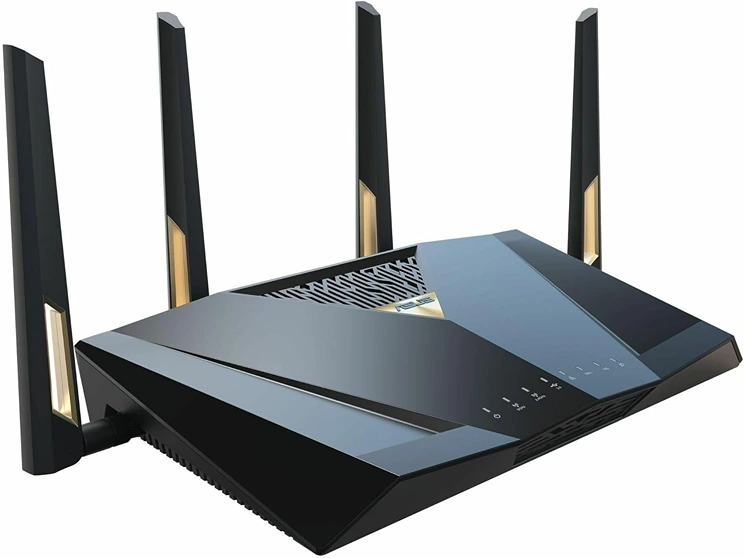
ASUS RT-BE88U Dual-Band WiFi 7
This hardware replaces your rental unit with Wi-Fi 7 speeds up to 7200Mbps to stop the monthly fees. It features dual 10G ports for massive throughput and allows for VPN installation directly on the router to block ISP snooping.