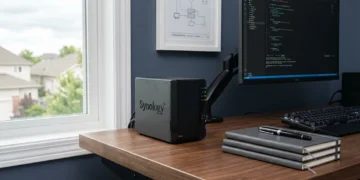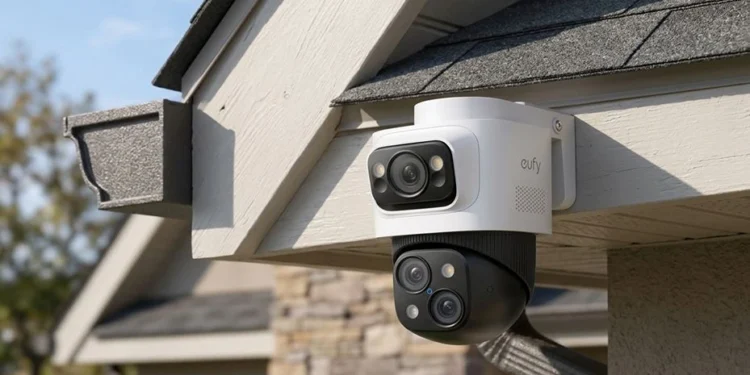
Walking through the house at midnight to check a noise used to mean opening three different apps. A cloud connection had to load before anything was visible. The final step, in fact, was hoping the footage hadn’t been deleted when the storage tier ran out. That routine ended the night the eufy S4 Max went online. Every camera on the property fed into a single local drive sitting inside the home. Pulling up footage from any point in the previous weeks took less time than unlocking a phone. Subscription free security hardware had always existed as a concept. Living with local storage security cameras as a daily reality feels entirely different from reading about it.
Most homeowners shopping for security cameras evaluate image quality, field of view, and night performance. Few ever ask where the footage actually lives after recording. That question matters more than any specification on the box. The answer determines whether the homeowner owns the system, or merely rents monthly access with a cloud-free security camera system instead. Footage on the eufy S4 Max lives on a drive inside the home under the homeowner’s control, accessible without an internet connection and retrievable without a billing relationship.
What Living With No Monthly Fee Security Cameras Feels Like
Pulling up footage the morning after a storm, for example, used to involve logging into a cloud portal. A timeline that only went back thirty days greeted every search for older recordings. Whether the motion detection had triggered at the right moment was never guaranteed. With the eufy S4 Max, that same check took seconds.
Once installed, the NVR interface loaded instantly on a tablet across the room. Continuous recording, rather than motion-triggered clips, filled the timeline completely. Systems built this way, according to no-fee camera testing, maintain complete recording timelines without cloud storage limits. Footage from three in the morning was as accessible as footage from three in the afternoon, with no portal, no login, and no buffering attached.
Continuous local recording changes how a security system feels to live with daily. Motion-triggered clip systems create gaps that only become obvious after something happens and the relevant footage turns out to be missing. A branch falling between two motion zones or a package left on a porch in the two minutes between triggers disappears permanently on a clip-based system. Every frame records continuously to local storage security cameras like the eufy S4 Max, so those gaps simply don’t exist. Reviewing an entire night, in short, takes as long as the homeowner wants to spend, not as long as the storage tier allows.
Smart Home Integration In A Subscription-Free Home Surveillance Setup
Getting the eufy S4 Max to communicate with the broader smart home ecosystem required less configuration than expected. The eufy app, specifically, serves as the central interface for camera feeds, motion alerts, and playback. Connecting to Alexa and Google Assistant required no separate hub and no additional subscription tier to unlock. Asking a voice assistant to show the front door camera on a kitchen display works exactly as it does with subscription-dependent systems. Here, the footage comes from a drive inside the home instead of a cloud server.
Even while away from home, motion alerts arriving on a phone behave exactly as they should. The alert arrives, the app opens, and the live feed loads within seconds. Reviewing the recorded clip requires no additional step and no additional payment, because that clip lives on the local drive rather than a rented storage tier, there’s no added step. That distinction sounds minor until something actually happens on the property and the footage needs to be there unconditionally.
Automation Inside A Cloud-Free Security Camera System
Motion detection events from the eufy cameras can trigger lighting scenes, lock doors, or push alerts to other connected devices. All of that runs through the automation logic built into the eufy app and compatible smart home platforms. A camera detecting motion at the side gate after midnight can illuminate the pathway, alert a phone, and lock the back door — none of it, notably, requiring a cloud connection. Locally processed automation is what a self-hosted home security hardware setup delivers when it’s built around ownership rather than access.
Installation and the POE Advantage Security Camera System
Running ethernet cable to each camera location before installation begins is the single most important preparation step. Power over Ethernet eliminates the battery management cycle entirely. Wireless cameras, by comparison, require periodic charging, create coverage gaps during that process, and often reduce recording resolution to extend battery life. A PoE-connected camera, as a result, records at full resolution continuously, without interruption or maintenance.
After running the cable, mounting the cameras and connecting them to the NVR through the PoE switch required a single afternoon. The NVR unit sits in a cabinet in the home office, draws minimal power, and operates silently. Adding cameras as coverage needs change requires connecting a new camera to the PoE switch and assigning it in the eufy app, a process that takes less time than mounting the camera itself. The PoE architecture represents the most reliable foundation for subscription free security hardware at the residential level. It also pairs naturally with other no-cost smart upgrades homeowners are exploring throughout the house.
Privacy Benefits Of Local Storage Security Cameras
Every frame recorded by the eufy S4 Max stays inside the home, the core promise behind any true subscription free security hardware setup. No footage travels to a corporate server for processing, storage, or analysis. No third party, likewise, holds access to recordings of the property, the driveway, or the front door. That architecture matters independently of any cost calculation. The alternative is handing continuous visual access to a corporation whose data handling practices sit outside the homeowner’s control. Locally stored security footage eliminates that arrangement entirely.
Cloud-dependent security systems process footage on servers inside corporate infrastructure. The terms governing that footage extend well beyond the monthly storage fee. Footage uploaded to a cloud server becomes subject to the platform’s privacy policy, law enforcement requests, and data retention decisions, none of which the homeowner controls. Keeping footage on a local drive eliminates every one of those variables at once. Homeowners repurposing older gear into private local storage will find the eufy S4 Max architecture provides a natural starting point for a broader locally controlled home ecosystem.
Why Locally Stored Security Footage Reduces Risk
Security researchers have, notably, consistently identified cloud-connected security cameras as one of the higher risk categories of consumer IoT hardware Continuous recording combined with always-on network connectivity and third-party data storage creates an attack surface that grows with every additional camera added, a pattern confirmed by detailed vulnerability analysis. A locally stored system eliminates the third-party data storage component entirely.
Footage that never leaves the home network cannot be accessed through a breach of a corporate server. Consumer Reports’ lab-tested privacy benchmarks on connected home devices show locally stored systems consistently outperform cloud alternatives across every privacy metric that matters to residential users.
Who Should Choose Self-Hosted Home Security Hardware
Living with the eufy S4 Max for an extended period makes the target homeowner clear. This is not a system for someone who wants to pull a camera out of a box and have it working in ten minutes. Running ethernet cable, configuring a local NVR, and managing a system outside of a managed cloud platform requires comfort with making infrastructure decisions independently. That profile describes homeowners who have already replaced ISP rental equipment, established a locally hosted VPN, and treat their home network as infrastructure they own rather than a service they subscribe to.
For that homeowner, the eufy S4 Max delivers exactly what subscription free security hardware should deliver. That means continuous local recording, integration without a secondary subscription, and full ownership of every frame. Homeowners mapping out camera paywall exits across every connected device category will find the eufy S4 Max sits at the center of that ecosystem, the anchor that makes everything else worth building around.
eufy Security System
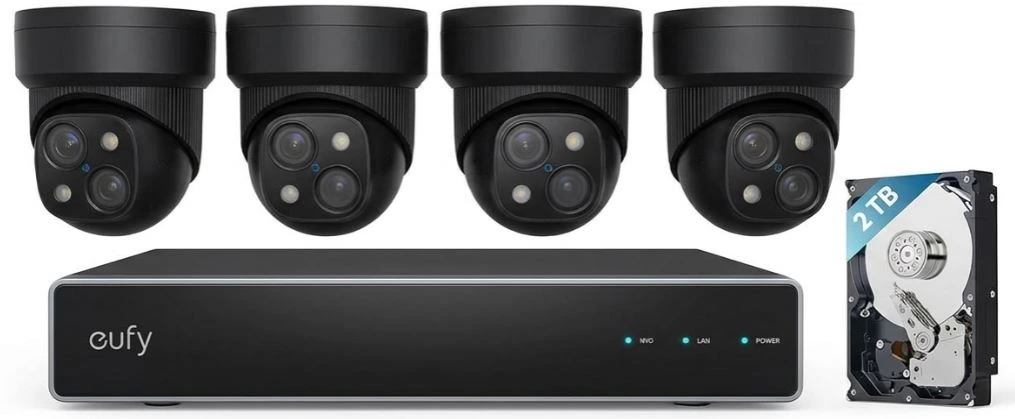
eufy Security System
4K POE Security Camera System