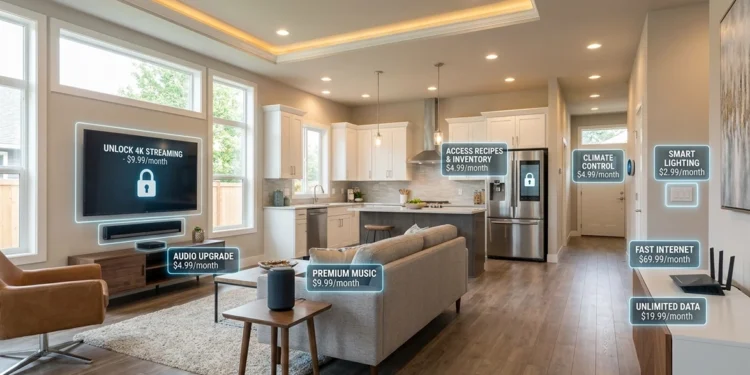
For most of the last century, ownership meant something simple. You bought a product, you owned it, and the transaction was complete. A TV purchased in 1995 worked exactly the same in 2005 without a monthly fee attached to turning it on. That relationship between buyer and product has been quietly dismantled over the past decade, and it did not happen by accident.
I have spent years making deliberate hardware and software choices to push back against the subscription economy. I still run Microsoft Office 2019 as a standalone install. I have always owned my own router, chosen specifically for hardware capability, privacy control, and to eliminate the ISP rental fee entirely. My home surveillance setup runs on Reolink hardware with local storage and remote access that never touches a cloud server. And recently the GM vehicle in my driveway became the latest example, with OnStar now requiring a subscription to access navigation features I previously used at no recurring cost. This is not a trend I am reading about. It is something I am actively fighting across every device I own.
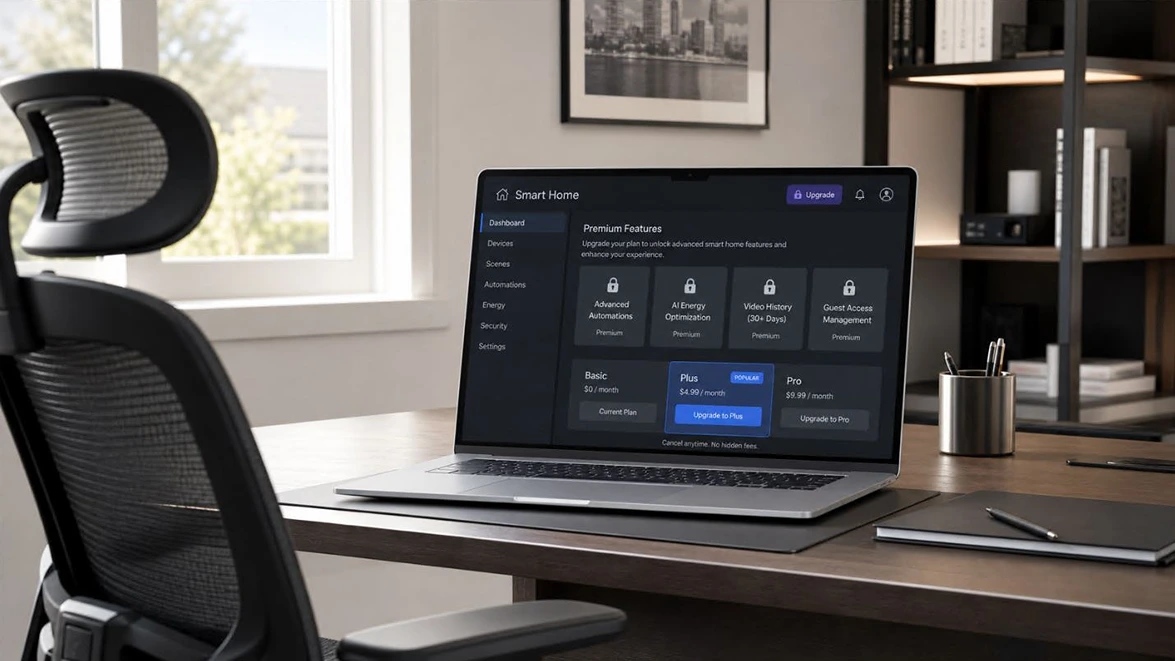
The subscription model did not arrive because consumers asked for it. It arrived because recurring revenue is more profitable than single transactions, and the technology finally existed to enforce payment at the hardware level. What used to be a finished purchase has become an ongoing financial obligation. Paying twice for the same thing became normal through gradual steps nobody explicitly agreed to when handing over their money. Software companies moved first when Adobe and Microsoft eliminated perpetual licenses and replaced them with monthly subscriptions, marketing the shift as progress. Cloud storage and security monitoring services followed, launching as subscriptions from day one so consumers never encountered subscription free alternatives in those categories. Hardware joined last, and Ring doorbells demonstrate the model perfectly. The device works, live video works, but accessing recorded footage requires a payment that never ends with no additional ownership gained.
When Owning Your Technology Became Impossible
The relationship between buyer and product was rewritten over the last ten years deliberately. Recurring revenue generates more long term profit than a single sale, and once the technology existed to lock features behind ongoing payments, corporations moved fast. Companies sold what looked like ownership but converted it into the starting point for a billing cycle that most buyers never agreed to when they made the purchase.
Software led the change because it was easiest to control. Adobe eliminated the option to buy Creative Suite outright and replaced it with a subscription that charges indefinitely for access to tools people already knew how to use. Microsoft followed with Office 365, turning decades of standalone software into a recurring charge. I made the deliberate decision to stay on Microsoft Office 2019 as a standalone install. The argument most often used against that choice is security, specifically that software without ongoing vendor support becomes a vulnerability. But for productivity software operating offline, the actual threat surface is minimal. A word processor that does not connect to external servers does not carry the same vulnerabilities as a cloud connected platform with continuous data transmission. The security argument gets deployed to justify a business model, not to protect the consumer.
Services came next. Cloud storage, security monitoring, and backup solutions launched as subscription only products, so consumers entering those markets never saw a one time purchase path. Hardware completed the transformation last because it required the most infrastructure to enforce. The Ring doorbell makes the strategy obvious. The camera itself is cheap, the margin comes from the subscription, and when the payment stops, recorded footage disappears even though the hardware still functions perfectly. Manufacturers lock features behind post purchase paywalls that were never disclosed at the point of sale.
Where Subscription Free Options Disappeared First
Home security became the most profitable testing ground for recurring fees because fear motivates people to keep paying. Ring, Nest, and Arlo built entire ecosystems where the camera costs almost nothing and the monthly subscription delivers the real margin. When someone stops paying, the hardware does not break. It just stops storing footage because that data lives on servers the buyer does not control.
The automotive industry took the subscription model further than most consumers expected. BMW announced heated seat subscriptions in select markets, a feature already built into the car and paid for at purchase, now locked behind a monthly fee. General Motors followed with subscriptions for remote start, and Toyota tested recurring charges for connected navigation. My own GM vehicle made this personal. Navigation features I used without a subscription now sit behind a recurring payment on hardware I own outright. GM’s own OnStar pricing history documents exactly how those features shifted from included to billable without the buyer ever agreeing to that change.
Software and home appliances finished the job by removing one time purchases from product categories where they had been standard for decades. Microsoft Office existed as a standalone product for years before Microsoft 365 converted it into a subscription. Adobe Creative Suite did the same. Whirlpool and LG both explored subscription models for appliance features, and the smart home category launched almost entirely subscription dependent from its first generation. Anyone trying to run a connected home without recurring fees now shops in a market that was never designed for subscription free living. People who have already moved toward owning their network hardware know that avoiding subscriptions requires deliberate hardware choices, and those options are disappearing fast.
Own Your Technology: What It Actually Looks Like
The fastest way to cancel your subscriptions and regain control costs nothing beyond a one time hardware purchase. I have owned my router from the start, chosen deliberately for hardware capability, privacy control, and to kill the ISP rental fee permanently. Most internet providers charge between ten and fifteen dollars monthly for equipment rental, which adds up to between one hundred twenty and one hundred eighty dollars every year for hardware that was outdated before it arrived.
Owning that equipment eliminates the rental fee for good. It also delivers something ISPs specifically designed the rental model to prevent: running a VPN at the router level. My Asus router handles VPN deployment across the entire home network. Every connected device, including smart home hardware that cannot run VPN software on its own, benefits from that single configuration without a per device subscription or individual app to manage. This masks every device on the network from traffic monitoring without paying a separate monthly VPN fee. People who made that switch found ditching the ISP router opened the door to every other subscription free option in the home. It proved the model worked before applying it to more complex product categories.
Most homes contain tablets that manufacturers label as obsolete. Software updates slow performance and push replacement purchases. Stripped of unnecessary software and assigned a single local function, those devices stay useful for years. Dedicated to home automation, they become reliable control centers. Local automation software allows devices to communicate over the home network, data stays inside the home, and monthly fees disappear entirely. Consumers who repurpose old hardware discover it delivers more value over time than newer products tied to proprietary subscription platforms.
Home Security Without the Subscription Ransom
Local storage remains the strongest subscription free alternative in home security. Network video recorders store footage on hardware the homeowner controls. Access does not require cloud permission, and this architecture was industry standard for years. It still exists, but manufacturers are quietly removing it from new products one generation at a time.
I built my own surveillance setup specifically to avoid the Ring and Nest subscription arrangement. The Reolink ecosystem offered two practical paths depending on installation preference.
I’d suggest the Reolink POE (Power over Ethernet) setup as the starting point for most homeowners. A single ethernet cable handles both data and power with no separate power supply, no WiFi signal dependency, and no battery to manage. The camera connects directly to a local NVR, footage records continuously to a drive inside the home, and no cloud subscription is involved at any point in that process.
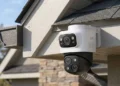
The Reolink Panoramic 4K addresses installations where running ethernet cable is not practical. The dual lens setup delivers 180 degree coverage from a single mounting point, the kind of wide view that would otherwise require two separate cameras, with local storage through a microSD card or NVR keeping footage off cloud servers entirely.
The feature that transforms both systems into genuinely capable remote security is port forwarding. Configuring the router to forward the correct port to the NVR local IP address makes remote access to live and recorded footage available from anywhere without using Reolink cloud service, without a subscription, and without footage leaving the home network at any point. That remote access capability is exactly what Ring and Nest subscription fees are selling, and it is available at no recurring cost when the hardware is set up correctly. Consumers ready to make that move can explore local security options that put full ownership back where it belongs, or go directly to the hardware that delivers permanent local control without a recurring fee attached.
The Window To Choose Is Closing
Subscription free alternatives do not vanish through announcements. They disappear through quiet design choices. Ring removed local storage from new cameras. Nest ended onboard storage. Arlo dropped local options without any formal notice. Each change sounded minor at the time. Together they reshaped what the market offers consumers who want ownership rather than access.
Consumers who understand what is happening can still build a home security and automation ecosystem completely outside the subscription model. Privately controlled, locally stored, and permanently owned. That window exists today. The products that make it possible are still on shelves. But the trajectory is clear. Every product generation moves further from local control and deeper into cloud dependency. Acting now means locking in an architecture that does not require monthly permission to function.
The decision starts with the network. It extends to the cameras. It applies to the software running on every screen in the home. And as my own vehicle makes clear, it now reaches into the driveway as well. Every category of consumer technology is moving in the same direction. The consumers who act while subscription free alternatives still exist are the ones who retain real ownership of the technology they paid for.