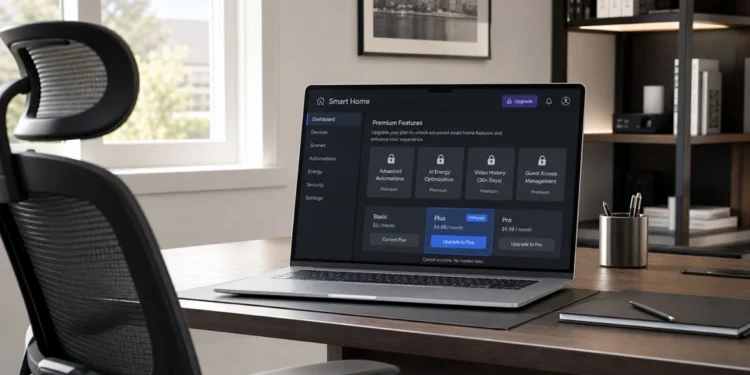
Setting up a new smart thermostat should have been a win. The app configuration went smoothly. However, reaching the screen that showed scheduling, remote access, and room by room temperature control felt like exactly what the purchase promised. Instead, every single feature sat behind a subscription tier. That reality never came up at the register. The box said smart home ready. Meanwhile, the app said subscribe to continue. As a result, subscription locked features stopped being an abstract complaint that day and became a personal financial reality showing up on a credit card statement every month.
Manufacturers have perfected a two stage sales model. Most consumers do not realize it until after the return window closes. Research, comparison, and reviews all happen without the complete cost of ownership ever being disclosed. A growing number of consumers have moved toward privately controlled hardware that costs nothing beyond the initial purchase. That shift away from recurring subscription dependency now touches every room of the connected home.
Subscription‑locked features refer to hardware capabilities that exist physically but remain unusable without ongoing monthly payments. In many cases, these limitations are not disclosed at checkout. Instead, they surface only after installation, when the return window has closed. Understanding where this model appears in security systems, climate control, networking, and automation is now essential before any connected‑home purchase.
Home Security and Subscription Locked Cloud Storage
Ring, Nest, and Arlo built the subscription locked features model early. Hardware priced accessibly enough to feel like a one time purchase withheld the single feature that justified buying it. Recorded footage storage sat behind a monthly fee. That fee appeared only in the smallest print on the packaging. A doorbell camera showing a live feed but saving nothing is a subscription trigger first and a security device second.
Purchase decisions across millions of homes rested on appearances rather than reality. A security camera on the wall right now may be recording footage that disappears before morning. That depends entirely on whether a payment processed by midnight. That reality was never raised at any point of sale.
Why Local Storage Disappeared Behind Paywalls
Manufacturers did not remove local storage to benefit consumers. A camera that saves footage to a drive inside the home needs no cloud server and no ongoing billing relationship. Local storage eliminates subscriptions entirely, which directly conflicts with recurring revenue models. That conflict explains why manufacturers stripped ownership paths from their products and pushed consumers toward renter‑style access models centered on refusing to pay to use hardware consumers already own. These engineering choices reveal industry priorities more clearly than any marketing claim.
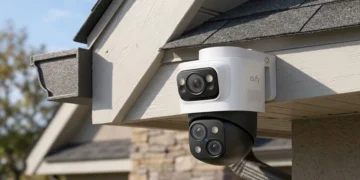
Reolink built its panoramic camera system around a different philosophy entirely. Footage records continuously to local storage. Motion detection processes on the hardware without a cloud connection. Access runs through an app the homeowner controls with no billing relationship attached. Paying rent on a house already owned outright is what the subscription dependent alternative feels like by comparison. Homeowners paying monthly for inferior results will find local security ownership delivers far more than the price difference suggests.
Thermostats Caught in the Hardware Subscription Trap
Smart thermostats entered the market with a clear value proposition. Learning schedules, automatic adjustment, and energy savings shipped with the hardware at no extra cost. Both Ecobee and Nest honored that promise early on. However, as their ecosystems matured, each company moved high‑value features behind new subscription tiers. Software updates later reclassified previously included capabilities, a pattern now associated with features reclassified as premium after purchase. Consumers who bought these platforms years earlier now face a recurring cost that was never part of the original transaction.
Nest demonstrates something more troubling than a disclosed subscription requirement. Features that shipped as standard were reclassified as premium benefits through software updates. No new purchase converted a completed transaction into an ongoing billing obligation. Existing owners received a firmware update and found capabilities they already paid for sitting behind a paywall. They never agreed to that at any point in the buying process. Consumers paying for features that originally shipped free will find the ownership cost comparison answers that question more directly than either manufacturer does.
Robot Vacuums and Subscription‑Locked Features
Robot vacuum manufacturers followed an identical approach to the thermostat category. Basic navigation, obstacle avoidance, and dock return work without a subscription. Persistent mapping, room by room scheduling, and cleaning history require a cloud connected account with a recurring fee. That fee was nowhere on the packaging when the product shipped. Consumers bought these devices expecting those features to be included. Nothing in the marketing materials suggested otherwise.
Identifying which robot vacuum platforms still deliver their complete feature set through local processing and which ones have moved their most useful capabilities behind a cloud subscription is not information manufacturers make easy to find before purchase. Spending time with the MOVA V50 Ultra in a real home environment across several weeks of daily use makes the distinction between genuinely local processing and cloud dependent features concrete rather than theoretical, and consumers trying to understand what on device mapping delivers without a recurring fee attached will find the answer grounded in actual usage rather than spec sheet claims.
Networking Gear and Undisclosed Recurring Fees
Most households rent a modem and router from their internet service provider. That monthly rental fee funds hardware giving the provider visibility into every device on the home network. Replacing rented equipment with owned hardware eliminates that fee immediately. It removes provider access to network traffic at the same time. VPN capability, parental controls, and traffic monitoring all become locally controlled features rather than cloud subscription add-ons.
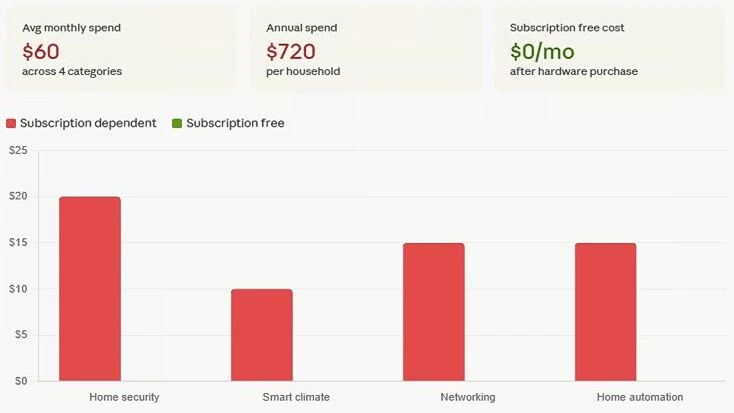
Making that single hardware swap carries more immediate financial and privacy impact than almost any other connected home decision a household can make, and the math closes well within the first two years of ownership for virtually every home that makes the switch. Consumers who have already been through that process and want to understand the full scope of what changes when the ISP rental equipment leaves the home will recognize in the rental replacement case a set of outcomes that go well beyond the monthly fee eliminated on the first billing cycle.
Avoiding Deceptive Tech Billing for VPN Access
Paying a monthly VPN subscription is unnecessary for homeowners running a router with VPN server capability built into its firmware. Most consumers paying for a third party VPN service do not know that capability already exists in hardware they own or could own. Every device on the network routes through an encrypted tunnel without a third party provider. No cloud account is required. No recurring cost exists beyond the electricity powering the hardware on the shelf. Aircove AX1800 delivers exactly that capability at the hardware level and permanently replaces a monthly subscription millions of consumers pay unnecessarily.
Replacing rented ISP hardware and establishing a locally hosted VPN connection builds the foundation every other subscription free decision in the home depends on. Local storage, local automation, and locally processed security footage all require a network the homeowner controls completely. Without that foundation, data still routes through corporate infrastructure regardless of which cameras or thermostats sit on the local network. Research published by the Electronic Frontier Foundation confirms that network level control represents one of the highest impact privacy decisions any household can make. Consumers ready to understand what router ownership replaces in monthly fees and provider access will find the case straightforward once the full picture is visible.
How to Identify Subscription‑Locked Hardware Before You Buy
The clearest signal appears when a device fails to deliver its full feature set without an account or cloud login. If recorded data, automation history, or core functionality disappears when payments stop, the product relies on subscription locked features by design. This outcome is not theoretical. Multiple platforms document cases of smart home devices losing functionality after subscriptions are imposed long after purchase. Buyers who confirm local storage, local processing, and offline operation can avoid the most expensive traps before the return window closes.
Hardware That Ends The Subscription Cycle
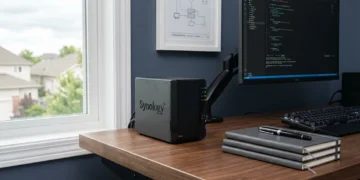
Locally controlled NVR security systems avoid subscription locked features by design. These systems record footage to a drive inside the home and process motion detection directly on the hardware. They do not rely on cloud accounts tied to billing status. Consumers access footage through software they own outright, not through services that revoke access after missed payments. This model restores permanent control over device behavior and recorded data while clearly demonstrating what permanent ownership still looks like in connected homes when billing relationships are removed entirely.
Approaching every connected home purchase with a single question changes every buying decision that follows it. Does this device deliver its complete feature set without a subscription. Asking before purchase is the only leverage a consumer holds because the subscription locked feature model is specifically engineered to surface after the return window closes and the hardware is already mounted on the wall. Consumers who want every device in their home operating under permanent local control, with footage stored privately and automation running without cloud dependency, will find the local ownership path covers exactly how that ecosystem gets built, or can go directly to the hardware delivering the most complete subscription free connected home experience available in the current market.