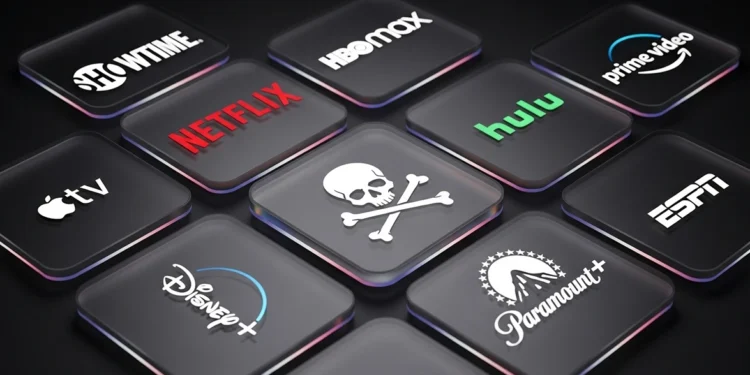
Monthly bills for online video services now cost more than old-school cable packages once did. This financial strain makes it harder for families to keep up as individual platform prices climb past thirty dollars a month on their own. The dream of one affordable place for movies and shows has quietly died over the last several years. Corporate decisions to split content across dozens of separate apps broke the simplicity that made streaming attractive in the first place, and that fragmentation is now driving a measurable resurgence of streaming piracy as frustrated viewers look for alternatives.
Frustrated viewers now deal with a landscape that feels like a return to the worst parts of the nineties, just with better production values. Media companies keep pulling shows from one app to launch entirely new platforms just to house them separately. This constant reshuffling makes it nearly impossible to find anything without maintaining five or six different logins at once. What used to be the simple pleasure of sitting down to watch a movie has slowly turned into a monthly chore of tracking which bill is due and which show moved where again.
How Subscription Fragmentation Created Cable Two Point Zero
The current streaming market has effectively recreated the exact problem cord-cutting was supposed to solve a decade ago. Major studios pulled their most valuable titles off shared platforms specifically to launch their own standalone services, a decision that now forces the average household to manage far more logins than they ever did under a single cable package. Many longtime subscribers describe this shift as a broken bargain, one where the promised savings and convenience of streaming quietly disappeared while the price tag kept climbing anyway.
Bundled packages marketed as a fix for this fragmentation often introduce a different kind of frustration instead. Several of these bundles now require subscribers to watch advertisements even on plans marketed as premium, a shift that feels particularly jarring to viewers who signed up specifically to avoid commercial interruptions in the first place. That combination of rising prices and declining value is a large part of why trust between viewers and streaming providers has eroded so significantly over such a short period of time.
Licensing disputes between competing media companies have made the experience even more unpredictable for everyday viewers. It’s now common for a show to disappear mid-season simply because a licensing agreement expired or shifted to a different platform entirely, regardless of how invested a viewer might be in that particular story. This unpredictability has pushed some households toward physical media and personal streaming hardware instead, since owning your own setup at least guarantees your library won’t disappear overnight due to a corporate licensing decision made somewhere else entirely.
The Real Legal Risks Involved
Federal authorities have not slowed down enforcement in response to this trend, and in some respects have escalated it considerably. Current federal law subjects commercial piracy site operators to penalties that can include ten-year prison sentences and multi-million dollar fines, depending on the scale of the operation involved. A recent case out of Las Vegas resulted in lengthy prison terms for five individuals who were found to have hosted thousands of pirated episodes through a coordinated distribution operation.
International cooperation has also intensified, with organizations like Interpol actively working with member countries to track and dismantle piracy networks operating across borders. Many of these networks fund their operations through credential theft and data harvesting embedded directly inside the illegal streams themselves, often disguising malicious code within the video player used to access pirated content. That detail matters for a reason separate from piracy itself: visitors to these sites are frequently exposed to real security risks regardless of whether they’re specifically targeting or aware of them.
Because pirated content is so often bundled with hidden scripts designed to compromise a visitor’s device, maintaining reliable cybersecurity protection has become relevant well beyond just households engaging in piracy directly. Any device connected to the internet today faces a growing volume of malicious scripts, phishing attempts, and credential-harvesting software regardless of a person’s specific browsing habits, which makes baseline security software a reasonable investment for essentially household of today.
Why Privacy Tools Are Gaining Broader Appeal
Separate from the piracy conversation entirely, a growing number of households are adopting stronger privacy tools simply because awareness of ISP data collection and network-level tracking has increased substantially in recent years. Internet service providers routinely monitor and, in many cases, sell browsing pattern data to advertisers, which has made privacy-conscious consumers more interested in tools that limit what their provider can actually observe about their household’s daily internet use. This shift has nothing to do with illegal activity and everything to do with a broader cultural move toward reclaiming basic digital privacy.
Specialized VPN routers have become a popular entry point for households pursuing that kind of whole-network privacy, since they extend encrypted protection to every connected device without requiring individual apps installed across every phone, laptop, and smart home gadget in the house. This approach solves a real coverage gap that individual VPN apps can’t address on their own, since many smart home devices and older connected hardware simply can’t run standalone privacy software regardless of how badly a household might want that protection extended to them.
A premium VPN service serves a similar, entirely legitimate purpose for individual devices, protecting a household’s browsing activity from casual observation on public Wi-Fi networks, hotel connections, or shared networks where data interception is a genuine and well-documented risk. None of this changes the underlying legal reality around piracy specifically; using privacy tools doesn’t make illegal downloading legal, and enforcement agencies have continued pursuing violations regardless of what network-level protections a household happens to have in place. The privacy trend and the piracy trend are running in parallel for related economic reasons, but they remain legally and practically distinct from one another.
HIDING THE DIGITAL FOOTPRINT
Accessing unlicensed material is an illicit act that carries significant legal weight. Internet service providers use sophisticated tools to flag these unauthorized data streams and report them to the proper authorities. This constant oversight forces those who break copyright laws to find ways to hide their digital location and identity from the network.
Bad actors often rely on specialized VPN routers to scramble their web traffic before it leaves the home. This technology makes it harder for providers to identify exactly which illicit sites are being accessed by the household. By encrypting the data at the hardware level, these users attempt to create a barrier between their illegal activity and the companies that monitor the web.
Sophisticated users also utilize a premium VPN service to mask their real-world location and IP address. This tactic is used to evade detection and avoid the automatic copyright notices that would otherwise follow a violation. While these tools hide the digital footprint, they do not change the fact that the underlying activity remains a serious breach of current law.
The Market Failure Behind the Continued Surge
Streaming providers are currently losing consumer loyalty largely because they prioritized short-term subscription revenue over long-term customer experience, a decision that created ideal conditions for piracy to expand as an alternative. Raising prices while simultaneously fragmenting content across more platforms sent a clear signal that the industry underestimated how much friction consumers were actually willing to tolerate before looking elsewhere entirely. The current pricing model appears to have reached a genuine breaking point, and the resulting consumer pushback doesn’t look like a temporary or short-lived reaction.
The industry now faces a fairly stark choice between meaningfully restructuring its pricing and bundling approach or continuing to watch its legitimate subscriber base shrink in favor of piracy. As long as legal streaming remains this fragmented and increasingly ad-supported even on premium tiers, a meaningful share of consumers will keep looking for ways to reduce their monthly costs, whether through piracy, shared accounts, or a return to owning their own streaming hardware outright. That last option remains the only path in this entire conversation that lets someone reduce recurring costs without stepping into any legal gray area at all, which is worth remembering before assuming piracy is the only alternative left on the table.
This broader trend of walking away from an increasingly expensive, fragmented system is likely to continue building momentum through the rest of 2026 unless something structural changes on the provider side. Consumers have made clear through their own behavior, both legal and illegal, that they value convenience and fair pricing considerably more than corporate promises about future improvements. Whether that pressure eventually forces real pricing reform, or simply continues fueling piracy’s steady growth in the meantime, remains one of the more consequential open questions facing the streaming industry heading into next year.
What seems increasingly unlikely is a return to the simpler, single-platform era that defined streaming’s earliest years, since the underlying business incentives that caused this fragmentation haven’t meaningfully changed. Studios still see standalone platforms as a way to capture subscription revenue directly rather than splitting it with a shared distributor, and that financial logic isn’t going away just because consumers are frustrated with the outcome. Any real fix would likely require either significant industry consolidation or a shift back toward broader content-sharing agreements, both of which run directly against the incentives currently driving individual studios to keep their most valuable titles locked behind their own dedicated apps.
In the meantime, the households most likely to avoid both the rising costs and the legal exposure tied to piracy are the ones actively rethinking how they consume media altogether, rather than simply adding another subscription or another workaround to an already strained system.