What Is a 15-Minute City?
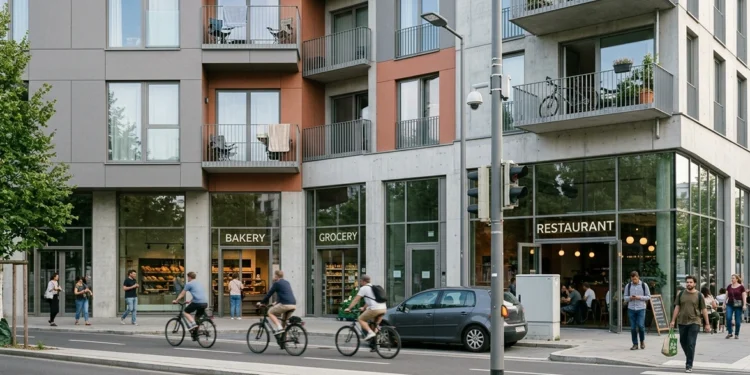
If you’ve spent any time online in the last couple of years, you’ve probably run into the phrase “15-minute city.” For some, it sounds like a dream come true, a place where you can walk to the grocery store, bike to work, and skip the traffic entirely without ever needing to hop in a car.
The concept was popularized by urban planner Carlos Moreno, who argued that everything a resident needs, work, groceries, healthcare, school, should be reachable within a 15-minute walk or bike ride from home. More than 50 cities worldwide have adopted some version of this philosophy, with Paris, Melbourne, and Portland frequently cited as early adopters. The idea gained serious traction during COVID lockdowns, when people suddenly had to rely on their immediate neighborhoods for nearly everything, and city planners took notice of just how livable a smaller radius could actually be.
The Public Infrastructure Powering the Concept
Making a 15-minute city function in practice requires more than just zoning changes and bike lanes. Cities need to know how people actually move through their streets, where congestion piles up during rush hour, and which neighborhoods are underserved by transit or retail options. That kind of insight doesn’t come from guesswork anymore. It comes from data, and lots of it.
Traffic flow sensors, pedestrian counters, and connected streetlights are already being installed in cities pursuing these plans, often bundled into what’s marketed as “smart infrastructure” upgrades. Data from these systems feeds into municipal traffic management platforms that adjust signal timing, reroute buses in real time, and flag high-congestion zones before they turn into full gridlock. Some cities have gone further, layering in air quality sensors and noise monitors under the same smart city umbrella, all justified as tools to improve daily life for residents.
None of this is inherently sinister on its own. A city that knows exactly where its buses get stuck in traffic can actually fix the problem instead of just reacting to complaints after the fact. But the same sensor network that improves a bus route can also, by design, build a remarkably detailed map of exactly who goes where, at what time, and how often, whether that was the original intent or not.
Enterprise Surveillance Tools Cities Are Deploying
This is where things get more complicated, and where a lot of the public concern starts to feel justified rather than paranoid. Automatic license plate readers, most notably from a company called Flock Safety’s camera network, have been installed by police departments and homeowners associations in more than 100,000 locations across the country. These aren’t your average red-light traffic cameras sitting quietly at an intersection.
Flock’s systems use AI to log far more than just a license plate number. They catalog vehicle make, model, color, and even distinguishing details like bumper stickers or body damage, building a searchable database that law enforcement agencies can query across jurisdictions. One Virginia resident discovered through a lawsuit that cameras in his own city had logged his location 526 times over just four months, an average of roughly four times a day, purely from ordinary driving around town. That kind of granular tracking raises obvious questions about what happens to the data once it’s collected and who else might eventually get access to it.
Some cities have started backing away from these systems entirely. Fort Collins, Eugene, and several other municipalities have canceled their Flock contracts after residents raised serious concerns about data potentially being shared with federal agencies without a warrant. Cambridge suspended its program over similar fears, with city council members openly admitting they no longer trust the vendor’s data-sharing assurances. Meanwhile, cities like Berkeley are moving in the opposite direction, expanding installations despite the pushback, which tells you this debate is far from settled and will likely keep escalating as more towns adopt 15-minute city frameworks.
The important distinction here is that this is enterprise-grade, government-procured technology, not something available on a retail shelf. You cannot walk into a store and buy a Flock camera for your front porch the way you’d buy a doorbell camera. It’s sold through subscription contracts directly to police departments and HOAs, operating on an entirely different level of sophistication, data retention, and legal reach than anything currently sitting in the average American home.
How Home Devices Could Extend the Monitoring
Here’s where the line starts to blur, even if the technology itself looks nothing alike on the surface. While enterprise surveillance largely stays out of consumer hands, the smart devices already inside your home generate a strikingly similar version of that same data, just voluntarily and with far less public scrutiny attached to it.
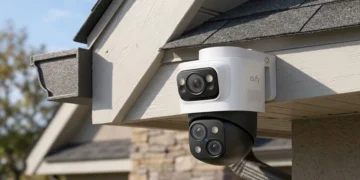
Smart thermostats learn your daily schedule down to the minute. Home security cameras log every person who walks up your driveway, and voice assistants sit listening for a wake word around the clock. None of these were designed from the ground up as surveillance tools, but in an increasingly connected city environment, that data doesn’t necessarily have to stay isolated inside your own home network forever.
Consumer Tech vs Government Tech: Where’s the Line?
It’s worth being blunt here, because a lot of the online panic tends to conflate two very different categories of technology. Your video doorbell and a municipal license plate reader network are not remotely the same thing, even if both happen to involve a camera lens pointed at the street.
Consumer devices are purchased and controlled directly by you, typically limited to your own property or personal account, and generally opt-in with settings you can adjust, disable, or delete entirely whenever you choose. Government and enterprise systems, by contrast, are installed and controlled by police departments, city agencies, or private security firms, networked across entire cities or regions, and often operating without meaningful individual consent or full public disclosure to the residents being monitored. The overlap only really becomes a genuine concern if data from your personal devices eventually gets shared, sold, or subpoenaed into one of these broader municipal systems, which is a real and worth watching possibility, but a fundamentally different threat model than assuming your smart speaker is secretly wired into a government surveillance grid today.
Protecting Your Privacy in a Smart City
If you want to reduce your exposure without going fully off-grid and abandoning modern convenience altogether, a handful of practical steps can go a long way toward putting you back in control. None of these require becoming a security expert overnight, just a bit of intentional setup.
Using a privacy-focused router is one of the simplest places to start. A router with strong firewall controls, like an Asus router with VPN support, lets you segment your smart home devices onto their own isolated network, keeping them separate from your primary computers and phones in case one device is ever compromised. For homes with many connected devices, whole-home VPN hardware can extend encrypted coverage across the network without requiring separate apps on every device. Running a VPN on your home network adds another layer on top of that, and while it won’t stop a city-owned traffic camera from photographing your car on the street, it does meaningfully limit what your internet provider and various connected apps can learn about your household’s daily habits and routines.
Auditing your smart devices on a regular basis matters just as much as the hardware itself. Check what each device is actually collecting, whether it’s a smart thermostat’s usage data or a camera’s cloud storage settings, and disable anything you don’t truly need running in the background. Choosing local camera storage can also keep more of your recorded footage under your direct control. Knowing your local ordinances rounds out the picture, since some cities legally require public disclosure before installing new surveillance infrastructure, meaning a quick check of city council meeting notes or a public records request can tell you exactly what’s already been approved near your own neighborhood.
What This Means for Your Town’s Future
The honest answer is that 15-minute cities themselves are not some secret plot hiding in plain sight. They’re an urban planning philosophy, and a fairly old one at that, which happens to be getting implemented alongside a fast-moving wave of new surveillance technology. The two trends are colliding at the same time, and that collision is exactly why the public reaction has grown so charged over the past couple of years.
What matters going forward is staying informed about what’s actually being installed in your own town, rather than reacting to whichever version of the story shows up first on social media. Distinguishing between the enterprise systems your local government controls and the consumer devices you personally choose to bring into your home is the difference between an informed decision and a fear-driven one. Making privacy choices based on verified facts, rather than viral speculation, puts you in a far stronger position no matter which direction your city ultimately takes.
The technology isn’t going away, and pretending otherwise won’t change much. Whether it gets deployed responsibly, with real transparency and meaningful public input, or quietly expanded without much oversight at all, is still very much up for debate in city council meetings happening right now across the country. Paying attention to those meetings, more than any single article online, is probably the most effective thing any resident can actually do about it.