
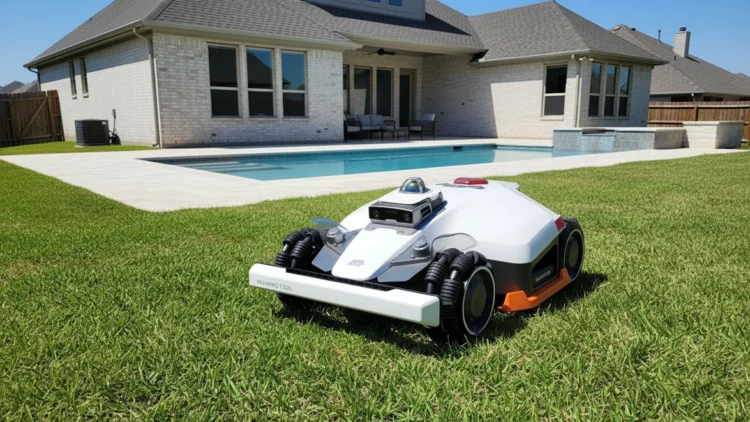
Buying a premium robotic mower feels like a one-time purchase. The box, the price tag, and the setup process all reinforce that idea. Robotic mower ecosystem lock-in tells a different story once you actually live with the hardware for a few months. What looks like durable equipment behaves more like a platform relationship. Your yard becomes the justification for every new line on that relationship’s balance sheet, whether that’s a connectivity upgrade, a replacement part, or a pressure to move to a newer model sooner than you planned.
The hardware itself often deserves the praise it gets. Suspension that handles ruts and roots. Chassis strength that outperforms older robots. Slopes it climbs without drama, terrain that would have stopped earlier generations cold. None of that changes the deeper issue sitting underneath all of it. Your mowing routine still lives downstream from software decisions that never originate in your yard. That’s exactly what robotic mower ecosystem lock-in means in practice, and it’s a distinction most buyers never think to ask about before they commit.
What Robotic Mower Ecosystem Lock-In Actually Means
A traditional mower has a predictable cost curve. You buy it. You maintain it. Its behavior stays the same unless you physically change something yourself. A connected robotic mower works differently. Cloud services, app logic, and company policy decisions all sit on top of the physical hardware. Every one of those layers can shift without your consent or even your awareness, often with no advance notice beyond a routine app update prompt.
That shift from machine to platform changes the math in ways a spec sheet never shows. The company controls authentication, scheduling rules, and safety thresholds through server-side decisions you never agreed to directly. A firmware update can quietly reclassify a slope you’ve mowed for months as off-limits. It can also adjust obstacle logic. A patch of grass that used to cut clean every time suddenly goes untouched for no reason visible from your side of the fence.
None of this requires anything to break physically. The hardware stays exactly the same from the day you bought it. What changes is the invisible layer of rules governing how that hardware is allowed to behave. That’s the part buyers rarely factor into the purchase decision at all. You’re not just buying a machine built to handle your yard. You’re buying into a roadmap set by a company that has never seen your property and never will.
How Firmware Updates Change What You Own
Over-the-air updates are supposed to improve a device over time, and often they genuinely do. They can also go badly wrong in ways that leave owners with a much worse outcome than the quirks they started with. One documented case involved a smart lock manufacturer whose firmware update bricked hundreds of customer-owned devices. The update rendered the locks inoperable and unable to even accept a corrective update afterward, leaving owners to ship hardware back and forth just to get a working door lock again.
Robotic mowers carry the same structural risk, since they rely on nearly identical over-the-air update architecture. A cloud-side tweak to scheduling logic can quietly transform a reliable morning start window into something you can no longer count on. You end up pulled back into active monitoring duty, just to confirm the machine still behaves the way it did the week before. That defeats the entire premise of buying automation in the first place, which was supposed to remove this kind of attention from your weekend.
The scale of this problem across the smart home category is larger than most owners realize going in. According to smart home update data, nearly one in five major smart home firmware updates resulted in some kind of integration failure between 2023 and 2024 alone. Most of those failures surfaced within three days of the update going out. That’s not a rare edge case buried in a footnote somewhere. It’s a real, recurring cost of ownership that rarely shows up anywhere in the glossy marketing materials that sold you the hardware in the first place.
The Rural and Edge-Case Owner Problem
If your property sits on the rural or semi-rural fringe, this mismatch shows up even faster than it does for suburban owners. Your lot is bigger. Your boundaries are stranger. Your trees, ditches, and outbuildings don’t line up with the clean geometric shapes the marketing photos assume. The hardware can physically traverse rough terrain just fine on its own. It’s the underlying software model of the world that was tuned for smaller, flatter, denser neighborhoods instead of yours.
Underneath that mismatch sits a stack of assumptions about connectivity that simply don’t hold once you get past reliable cell coverage. The mower and its companion app expect stable Wi-Fi, responsive cloud services, and consistent GPS or mapping inputs at all times. Dead zones, spotty broadband, and unusual physical landmarks confuse its guidance far more often than any brochure admits upfront. When scheduled runs depend on a remote check-in, connectivity gaps turn the mower’s intelligence brittle rather than helpful. You end up treated less like the ideal owner with plenty of land and more like an edge case the platform was never actually built to handle well.
Why Upgrading Doesn’t Solve the Core Problem
If you already own an earlier model from the same platform, the upgrade decision isn’t as simple as replacing worn-out equipment. Your current mower might miss spots or struggle on certain slopes. You’ve learned its specific quirks, though, and built routines around them over time. A newer generation promises better traction and cleaner coverage. It also resets that whole relationship. You’d be trading known, stable limitations for a more capable machine whose behavior gets shaped by ongoing software decisions rather than anything visible on your actual lawn.
That trade represents a deeper shift than most upgrade decisions usually involve for other kinds of hardware. Earlier models often leaned on local schedules and simple rules that stayed consistent over time without much interference. The newer ecosystem ties more tightly to the cloud, automates more decisions, and changes its own behavior more willingly in the name of safety or new features. Before moving to a newer model, it’s worth asking a direct question. Are you solving a specific, concrete problem? Or are you just stepping deeper into a platform that claims a bigger say over your own weekly routine?
The Closed Ecosystem by Design
Once you’ve lived with one of these machines for a while, the sharpest limits on what it can do turn out to be ecosystem choices rather than mechanical ones. The hardware could easily act as one node in a smarter yard setup, reacting to a weather station or cooperating with existing sprinkler systems. Instead, it stays deliberately fenced inside its own app, its own cloud, and a short list of approved accessories chosen entirely by the manufacturer.
This is the same pattern we’ve documented in our broader look at smart home cloud dependency, where a device’s most useful behaviors get walled off from the rest of your home rather than integrated into it. The company guarantees a predictable baseline experience instead of exposing the kinds of hooks that power users could bend into something genuinely tailored. Schedules and smart modes end up optimized for a median lawn that doesn’t match your actual property.
For owners who want more control over how their connected devices actually behave, exploring local control alternatives is usually a more productive path than waiting for a manufacturer to open up its platform voluntarily. Local-first systems keep the decision-making on hardware you own rather than a server you don’t, which removes most of the lock-in risk this entire category depends on.
What Long-Term Ownership Actually Depends On
The longer you plan to keep one of these mowers, the more its behavior depends on invisible agreements that can shift without your input at any point. Firmware updates arrive on their own schedule, quietly adjusting how the machine interprets slopes, obstacles, and boundaries in ways you may not notice until a familiar pattern suddenly breaks one morning. App revisions and backend changes can alter how schedules get enforced or which models receive new features first.
Over time, you stop seeing the mower as a fixed appliance you bought once. You start recognizing it as an endpoint in a system being continuously revised somewhere you’ll never see. A change that looks minor from the company’s perspective, like a new safety rule or a retired integration, can ripple out into missed cuts or entire zones that stop getting serviced the way they used to.
This kind of volatility rarely shows up on a spec sheet, yet it dominates the actual long-term ownership experience more than any hardware spec ever does. The FTC has taken direct notice of this exact pattern across the connected device industry. A recent FTC report on smart devices found manufacturers routinely fail to disclose how long a product will keep receiving the software support its advertised features depend on. Several companies in that review couldn’t even confirm their own devices’ support end dates when asked directly.
That gap between marketed features and actual software support timelines is exactly the kind of invisible agreement owners sign up for without realizing it. A mower sold today on the strength of its scheduling intelligence and obstacle detection carries no real guarantee those systems keep improving, or even keep working the same way, five years down the road. The FTC’s findings suggest regulators are starting to take that disclosure gap seriously across the entire smart device category, mowers included.
Deciding Whether the Trade-Off Is Worth It
What a robotic mower actually sells isn’t the machine itself. It’s the promise of removing a recurring chore from your weekend permanently. On good days, that promise holds up well, and the mower genuinely glides across your lawn while you spend that hour on something you’d rather be doing instead. The catch is that you’re not just buying a tool. You’re enrolling in a system whose rules can change without ever asking what your weekend actually looks like.
Robotic mower ecosystem lock-in isn’t a flaw hidden in one bad product. It’s the structural reality of nearly every connected hardware category right now, mowers included. If you’re willing to trade some autonomy for convenience and accept that updates might occasionally disrupt your routine, this trade-off can genuinely be worth it. If you’d rather your yard depend only on hardware you fully control, the smarter move is walking away before that expectation gets rewritten by a company that answers to someone other than you.
Luba 3 Robot Mower
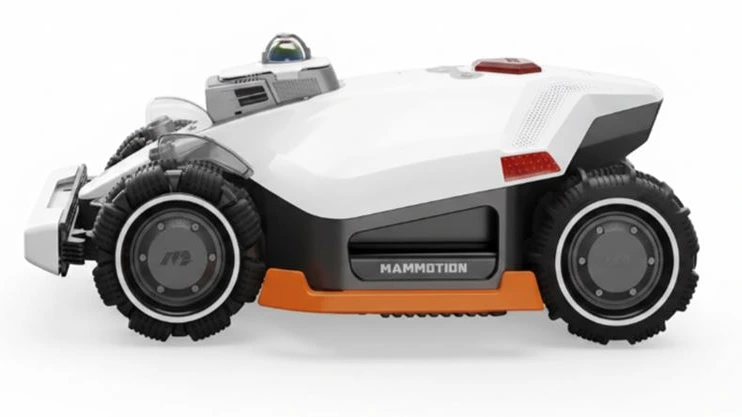
Mammotion Luba 3
AWD 3000 Robot Mower