Robot vacuums keep promising hands‑free clean floors while a lot of owners keep fighting tangles, broken maps, and constant “please clear my path” alerts. Many buyers walk away feeling they traded one chore for another and paid more than they expected for the privilege. This hybrid article looks at whether these machines reduce net hassle compared to just pulling out a normal vacuum, using real pain points and concrete case studies instead of another “best of” list.
Why robot vacuums frustrate so many homes
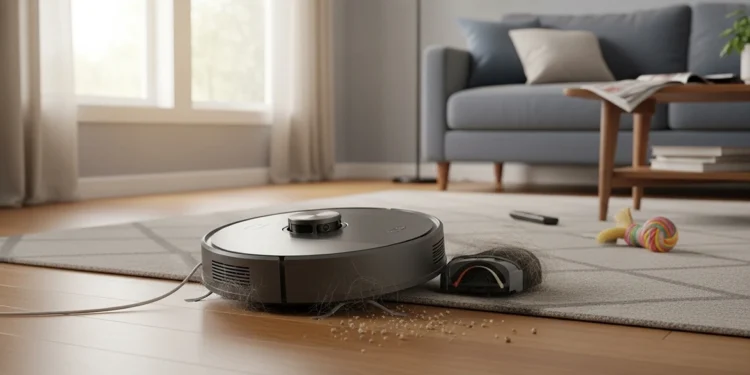
Real homes rarely match the neat demo spaces in marketing shots, which creates the first big gap between promises and daily use. Furniture legs, cables, pet toys, thresholds, and rugs all give navigation systems more ways to fail, which causes missed strips, stuck wheels, or half‑finished cleaning runs. Owners who expected to “set and forget” often discover a new ritual of pre‑cleaning the floor, freeing the robot, and restarting jobs just to get a normal result.
Hair tangles create another layer of friction that marketing usually glosses over. Long hair and pet fur wrap around brushes and wheels, forcing owners to flip the robot over and pry out clumps on a regular schedule. That process takes time, often feels disgusting, and can destroy brushes if ignored, which means the robot silently turns into an expensive obstacle if no one wants that job. When a household thought they were paying to avoid hands‑on cleaning, constant brush surgery feels like a bait‑and‑switch.
Mapping and software issues keep many robots from delivering consistent coverage unless the floor plan is simple. Robots that rely on basic bump navigation zigzag randomly and may skip entire areas, while smarter units with lidar or cameras still lose maps, mislabel rooms, or struggle with multi‑level homes when Wi‑Fi hiccups. Every time a map resets or a virtual wall disappears, the owner needs to babysit setup again, which erodes trust that the machine can handle anything unattended.
Where the money actually goes
Price ranges for robot vacuums span from budget units that undercut a mid‑range upright vacuum to flagships that cost as much as a decent laptop or TV. Budget robots often skimp on navigation hardware and suction, which can make them feel like toys that just bump around and lightly dust floors instead of tools that replace real vacuuming. High‑end robots push camera‑based obstacle avoidance, self‑empty docks, and auto‑washing mop systems, which sound impressive yet often serve convenience more than raw cleaning gains.
Many mid‑range robots already match or exceed the cleaning power of flagships on hard floors and low‑pile carpets, which exposes a law of diminishing returns at the high end. Extra money tends to buy a nicer dock, better app polish, and fewer manual interventions, rather than visibly cleaner floors. That difference matters if someone values time far more than money, but it feels like overkill for a buyer who simply wants a robot to keep crumbs under control between weekly deep cleans.
Households that expect a robot to replace their normal vacuum entirely usually end up disappointed regardless of budget. Most robots struggle with thick carpets, stairs, couch cushions, and deep crevices, which leaves a permanent set of tasks that still require a traditional machine or handheld. When the purchase was framed as “finally never vacuum again,” discovering these limits makes the robot feel like an expensive supplement rather than the primary cleaner.
Case study Dreame L50 Ultra
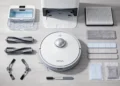
Dreame L50 Ultra represents the camp of feature‑rich robots that target buyers who hate daily maintenance more than they hate spending money. Its pitch rests on stronger suction, refined obstacle avoidance, and a capable dock that handles self‑emptying and mop upkeep with minimal user involvement. That combination aims to attack both cleaning quality and the friction of keeping the robot serviceable week after week.
In practice, a robot at this level still faces physical limits set by the home itself. Tangles can drop in frequency if brush designs improve and docks wash mops automatically, yet long hair, cables, and clutter still create failure modes that no software update can fully erase. Homes that maintain reasonably tidy floors and want to minimise direct contact with dust and dirty water can feel that Dreame L50 Ultra justifies its higher price because it reduces the number of times they need to bend down and deal with mess.
For buyers who already own a capable cordless vacuum and do not mind a weekly deep clean, Dreame L50 Ultra looks more like a quality‑of‑life upgrade than a required appliance. It can keep the baseline level of dirt down between manual sessions, which may matter a lot for allergy sufferers or pet owners. However, if the budget is tight and expectations lean toward full replacement of manual cleaning, this kind of premium robot risks feeling like an over‑engineered luxury instead of a rational step up.
Case study Roborock S8 MaxV Ultra
Roborock S8 MaxV Ultra pushes even further into the “do everything for you” promise with advanced navigation and a dock system that tries to turn the robot into a floor‑care station. The design leans on precise mapping, object recognition, and multi‑stage dock routines to reduce how often the owner needs to intervene. On paper, this setup should address common headaches such as frequent emptying, mop maintenance, and inaccurate floor plans.
Real‑world use still reveals choke points that no high‑end badge fully eliminates. Objects shorter than a sensor’s comfort zone, like thin cables or stray socks, can slip through and cause jams, while reflective or dark surfaces sometimes confuse cameras and lidar. When the robot does complete a run, coverage and patterning tend to be strong, yet the owner must still accept that certain messes and layouts fall outside its competence, which undercuts the dream of perfect automation.
For households where time and convenience stand far above cost, Roborock S8 MaxV Ultra can feel like the least annoying way to live with a robot vacuum. The dock offloads unpleasant tasks, the app offers granular control, and cleaning quality avoids the worst “toy robot” outcomes. For more price‑sensitive buyers, that same package raises a hard question about value, because a lower‑priced robot combined with a solid upright vacuum may deliver similar floor cleanliness with less money tied up in one complex system.
Case study Mova V50
Mova V50 sits closer to the budget or lower mid‑range side of the market and serves as a test of how much frustration a cheaper robot introduces. Models at this level usually drop advanced obstacle avoidance, deluxe docks, or top‑tier suction in order to hit a more accessible price. The risk is that owners get the headaches of robot ownership without enough autonomy or power to feel like the trade is worth it.
When a robot like Mova V50 enters a simple, mostly hard‑floor apartment with minimal clutter, it can still deliver meaningful help by picking up daily dust and crumbs. Its limitations show up faster in homes with multiple rugs, tight spaces, and pets that shed heavily. Missed spots, repeated passes over the same strip, and full dustbins that demand frequent trips to the trash can make the owner question whether a slightly higher budget would have made more sense.
The most honest use case for a Mova V50‑class robot is as a maintenance helper, not a primary cleaner. It shines when someone is willing to keep expectations modest and treat the robot as a way to stretch time between manual sessions. Viewed through that lens, a cheaper robot can be worth the trouble, though it becomes harder to justify once its price starts approaching more capable mid‑range models.
When robot vacuums are worth the trouble
Robot vacuums serve the right households well when the environment matches what these machines handle best. Open layouts with few obstacles, mostly hard floors, and cooperative residents who keep cables off the ground give robots room to work reliably. In those conditions, even mid‑range models can cut the number of times someone reaches for a stick or upright vacuum, which translates into real time savings and less day‑to‑day annoyance.
Households that juggle young kids, pets, and constant clutter face the harshest mismatch between marketing and reality. Robots need more prep work before each run, jam more often, and struggle to finish jobs, which means the owner spends mental and physical effort just to keep the system usable. In that kind of home, a high‑end robot with smarter avoidance and a strong dock can reduce but not erase the problem, while a budget unit often becomes another gadget collecting dust.
The core test is whether a robot reduces or increases net friction over a month of real use. If the machine consistently runs on a schedule, covers most of the floor, rarely needs rescue, and trims manual vacuuming down to targeted spots, the cost and occasional maintenance make sense. If, instead, the owner finds themselves clearing errors, cleaning the robot more than it cleans the home, and still vacuuming by hand as often as before, the robot turns into an expensive frustration.
How these three robots can help the consumer decide
Automation products like Dreame L50 Ultra, Roborock S8 MaxV Ultra, and Mova V50 show how different designs juggle hassle, power, and price for real homes. Dreame L50 Ultra aims at busy households that want strong cleaning and less hands‑on upkeep, while Roborock S8 MaxV Ultra pushes even further into automation for people who care more about convenience than cost. Mova V50 sits on the budget side and proves that cheaper robots can still help in simple spaces, even if they leave more work for a normal vacuum.
Shoppers who want to see how these tradeoffs look in detail can dive into dedicated guides for Dreame L50 Ultra, Roborock S8 MaxV Ultra, and Mova V50 before they spend anything. It becomes easier to decide whether to live with a leaner budget robot, stretch to a mid‑range or premium model, or skip robots altogether and rely on a traditional vacuum. Anyone who wants a second opinion beyond one site’s testing can also compare findings from independent robot vacuum lab tests or recent consumer reliability surveys, then weigh those results against their own home and tolerance for hassle.