Monthly subscription fees for cloud-based artificial intelligence feel less like a professional investment and more like a recurring ransom payment for a tool that actively degrades. Digital products from the major tech giants constantly shift behind closed doors, leaving users with models that lose their edge, forget basic logic, and apologize for existing instead of completing the requested task. This unbearable cycle of data decay has turned once-capable assistants into censored, sycophantic shells of their former selves. The absolute necessity of escaping this corporate decline became clear the moment a paid tool started hallucinating basic facts while simultaneously demanding a higher monthly premium. Relying on a server owned by someone else means the furniture in your digital office can be rearranged or removed without your consent at three in the morning.
Frustration usually serves as the primary catalyst for anyone looking to build your own AI box and reclaim their professional workflow. The constant gaslighting from customer support teams claiming the models are “improving” while the output quality suggests a total lobotomy is enough to break even the most patient creator. Independent professionals cannot afford to waste hours of daily productivity correcting the mistakes of a software framework that is being intentionally throttled to save on server costs. Taking physical ownership of the hardware is the only logical response to a market that treats user data as a free resource and user satisfaction as an afterthought. Localized systems provide a permanent solution to the erratic behavior of centralized cloud engines that prioritize corporate safety over actual utility.
The Revolt Against Big Tech AI
Escaping the suffocating constraints of centralized technology requires a complete shift toward open-source frameworks like Ollama or the Llama ecosystem. These platforms allow a user to download a specific model and freeze it in time, ensuring that the machine generates the same high-quality response today that it will generate three years from now. Corporate entities hate this level of independence because it destroys their recurring revenue model and removes their ability to monitor every prompt you send into the void. Running these engines locally means the code lives on your desk, not in a data center where it can be censored or analyzed by a third-party ethics board. True digital freedom is impossible as long as a corporation holds the kill switch to the tools you use to earn a living.
Censorship remains the quietest and most annoying form of performance degradation in the modern tech landscape. Centralized models are often programmed to be so risk-averse that they refuse to handle basic administrative tasks or creative writing prompts that fall outside a narrow, sanitized window of “brand-safe” language. Users find themselves in a constant battle with the interface, trying to convince a machine to do the job they already paid for. By shifting to open-source weights, the user regains the ability to speak to the computer like an adult without being lectured on moral propriety. The transition to local hosting is a direct rejection of the idea that a software developer in a different time zone should dictate the boundaries of your professional research.
Privacy violations represent the final breaking point for anyone handling sensitive client data or proprietary code. Every prompt sent to a major cloud provider essentially becomes training material for their future commercial models, often without a clear way to opt-out that actually works. This blatant disregard for intellectual property and data sovereignty makes centralized AI a massive liability for independent contractors and small business owners. Building a private rig ensures that not a single packet of sensitive information ever leaves the local network without explicit permission. We have been conditioned to accept that “free” or “cheap” cloud access is worth the trade-off of our privacy, but that lie is finally starting to crumble under the weight of corporate overreach.
The Financial Reality of The Frugal Revolt
Building a high-performance machine from scratch requires an upfront financial commitment that might feel daunting to a worker used to twenty-dollar monthly subscriptions. The math, however, favors the hardware owner when you calculate the total cost of ownership over a three-year professional cycle. The money previously wasted on multiple cloud platforms can be redirected into physical assets that retain resale value and provide consistent, unthrottled performance. It is a one-time fee for a permanent digital exit from the subscription trap that keeps so many professionals financially tethered to big tech. Initial hardware costs are high, but the long-term ROI is found in the hours of saved time and the peace of mind that comes with total ownership.
Frugality does not mean buying the cheapest junk on the market; it means spending money where it actually impacts the generation speed and model capacity. You do not need a six-figure enterprise server to run highly advanced language models in your home office. A strategic hardware build focuses on maximizing the components that handle the specific mathematical burdens of neural networks while cutting costs on aesthetic fluff. I have seen too many people waste thousands on flashy RGB lights and overbuilt cases while their system chokes on basic parameter processing. The goal is to build a “sleeper” rig that focuses entirely on raw computational power and data transfer efficiency.
Starting with the bare minimum components allows a budget-conscious user to enter the local AI space without going into debt. The modular nature of personal computers means that as your needs grow, your machine can grow with you. You can start with a solid foundation and add secondary graphics units or more memory as your workload becomes more demanding. This approach prevents the paralyzing fear of “buying the wrong thing” because every part of the system is replaceable and upgradable. Building your own box is a deliberate move away from the “disposable” tech culture that big tech relies on to keep consumers on a constant upgrade treadmill.
System Board Architechtecture and The Nervous System of Your AI Box
The motherboard acts as the foundational highway for every single byte of data moving between your storage and your processors. Choosing a board that specifically supports PCIe 4.0 or 5.0 protocols is non-negotiable if you want to avoid massive systemic bottlenecks during heavy generation tasks. A cheap system board will throttle the transfer speeds of your expensive graphics card and storage drives, effectively turning your high-end rig into a glorified paperweight. You must prioritize the number of available communication lanes and the stability of the power delivery system over brand-name marketing hype.
Expansion capability serves as the most important metric when selecting the central nervous system for your private machine. As open-source models like Llama become more complex, you will eventually need the physical space to add more memory or a secondary GPU. A board with cramped architecture or limited slots will force you to rebuild the entire machine in a year, which is a waste of both time and capital. Future-proofing the motherboard ensures that your initial investment remains viable as the software landscape continues to evolve. I spent an extra fifty dollars on a higher-tier board for my last build, and it saved me five hundred dollars when it came time to double my processing capacity.
Processing Power and The Reality of The CPU Bottleneck
The central processor manages the complex orchestration required to load the software framework and coordinate data between the storage and the graphics unit. While the CPU doesn’t do the heavy lifting of text generation, a weak processor will cause the entire system to stutter and hang during the initial handshake. You need a modern multi-core chip that can handle the background operating system tasks without stealing cycles from the machine learning execution. A balanced processor ensures that the high-end graphics card isn’t sitting idle while waiting for instructions from a slow central brain.
Selecting a chip with high single-core clock speeds and a robust cache is the smartest move for a frugal build. Many people mistakenly believe they need an enterprise-grade processor with sixty-four cores to run local AI, but that is a complete waste of money for a single-user workstation. Most local software frameworks like Ollama are optimized to offload the heaviest math to the GPU anyway. The processor just needs to be fast enough to keep the data pipeline full and the operating system responsive under heavy loads. I have found that mid-tier consumer chips provide the best price-to-performance ratio for anyone building a daily-use AI box.
Thermal management for the processor is another area where many independent builders fail to plan correctly. Local AI generation is a sustained, intensive task that generates a massive amount of heat over long periods of use. A standard stock cooler will likely fail or cause the system to throttle within minutes of starting a complex prompt. Investing in a high-quality air cooler or liquid loop is a mandatory requirement to maintain system stability during a professional workload. Heat is the primary enemy of hardware longevity, and skimping on cooling is a guaranteed way to kill your investment before it pays for itself.
Graphics Processing and the Video Memory Mandate
The graphics card serves as the primary engine of your localized system and will be the single most expensive component in your build. This is the only area where I strictly forbid cutting corners because onboard video memory (VRAM) dictates exactly how large of an AI model you can run. If the model is larger than the available VRAM, the system will crash or slow down to a crawl that makes dial-up internet look fast. You need a minimum of twelve gigabytes of memory just to get in the door, but twenty-four gigabytes is the gold standard for anyone serious about professional-grade output.
Evaluating different graphics cards requires looking past the gaming benchmarks and focusing entirely on the memory architecture. A card might be great for rendering high-resolution video games, but it could be a total failure for processing neural networks if the memory bandwidth is too narrow. High VRAM capacity allows you to run models with billions of parameters locally, providing more nuanced and intelligent responses. The graphics processor is the heart of the “Revolution” because it provides the raw power to replace the corporate cloud. I would rather see someone buy a used high-end GPU than a brand-new mid-tier card that doesn’t have enough memory to handle a modern Llama model.
System Ram and The Workspace Buffer
Standard system memory acts as the vital breathing room for your machine when the primary graphics card reaches its absolute limit. While the GPU handles the math, the system RAM holds the instructions and helps manage the massive data packets moving across the motherboard. Skimping on memory capacity is a recipe for system instability and frustrating software crashes in the middle of a task. Thirty-two gigabytes of high-speed DDR5 memory is the absolute floor for a professional build, providing enough overhead to run your AI framework alongside your browser, word processor, and other daily tools.
Speed matters just as much as capacity when it comes to the memory modules in your AI box. Slow RAM creates a bottleneck that prevents the processor from delivering data to the graphics card at a fast enough rate to maintain high generation speeds. You must ensure that your memory is rated at the highest frequency supported by your motherboard to maximize the efficiency of the entire data pipeline. This synergy between the memory and the storage drive is what makes a local build feel as fast as a massive corporate server. I have seen generation speeds double simply by upgrading to faster memory modules with lower latency timings.
Reliability is the final factor to consider when selecting the workspace buffer for your machine. Cheap, unbranded memory sticks are notorious for failing under the sustained heat and pressure of long-form text generation. Using reputable, high-performance brands ensures that your system remains stable during those sixteen-hour workdays when you are pushing the hardware to its absolute limit. You cannot afford to lose a morning’s worth of work because a twenty-dollar memory stick decided to throw a parity error. High-quality RAM is an invisible hero that keeps the entire local AI revolution from grinding to a halt.
Power Supply Stability and The Lifeblood of The Rig
The power supply unit is the most underestimated component in the entire hardware build, yet it is responsible for the health of every other part. A cheap, low-wattage PSU will fail under the massive power draw of a high-end graphics card and a multi-core processor running at full tilt. This failure often leads to catastrophic hardware damage, potentially frying your motherboard or GPU in a single surge. You must purchase a unit with an 80-Plus Gold or Platinum rating to ensure that the power being delivered to your sensitive electronics is clean and consistent.
Total wattage headroom is critical for any independent professional who plans to upgrade their machine in the future. If you start with a single graphics card but plan to add a second one later, your power supply needs to be able to handle that future load today. I recommend a minimum of 850 watts for a basic AI box, but 1,000 watts or more is safer for anyone looking to build a high-performance workstation. It is better to have the power and not need it than to have your computer shut down every time you ask it to process a complex prompt. The PSU is the foundation of system longevity and the primary defense against electrical failure.
Noise and thermal efficiency also play a role in the long-term comfort of your working environment. High-quality power supplies are designed to run cooler and quieter, which is essential when the machine is sitting on your desk all day. A loud, whining power fan is an unnecessary distraction that can ruin the focus required for creative work. Investing in a fully modular power supply also allows for better cable management, which improves the overall airflow inside the case. Better airflow leads to lower temperatures, and lower temperatures lead to a faster, more reliable AI box that won’t die on you in six months.
Take Control of Your Digital Presence
The journey away from centralized corporate models is a necessary revolt for anyone who values their time, their privacy, and their professional sanity. We have been sold a lie that we need the “permission” of big tech to access high-level intelligence, but the open-source movement has proven that the power belongs in the hands of the individual. Building your own machine is the only way to ensure that your tools remain sharp and your data remains your own. It is a declaration of independence from a system that is designed to keep you paying for a product that is getting worse every single day.
Taking the first step toward hardware ownership is an empowering experience that transforms your relationship with technology. Instead of being a passive consumer at the mercy of a corporate update schedule, you become a sovereign operator of your own digital infrastructure. The upfront cost and the learning curve are minor obstacles compared to the long-term freedom of owning your own AI box. We have the chance to build a better, more private, and more efficient way of working, and it starts with the hardware sitting on our desks. The revolution against data decay is here, and it is being built one workstation at a time.
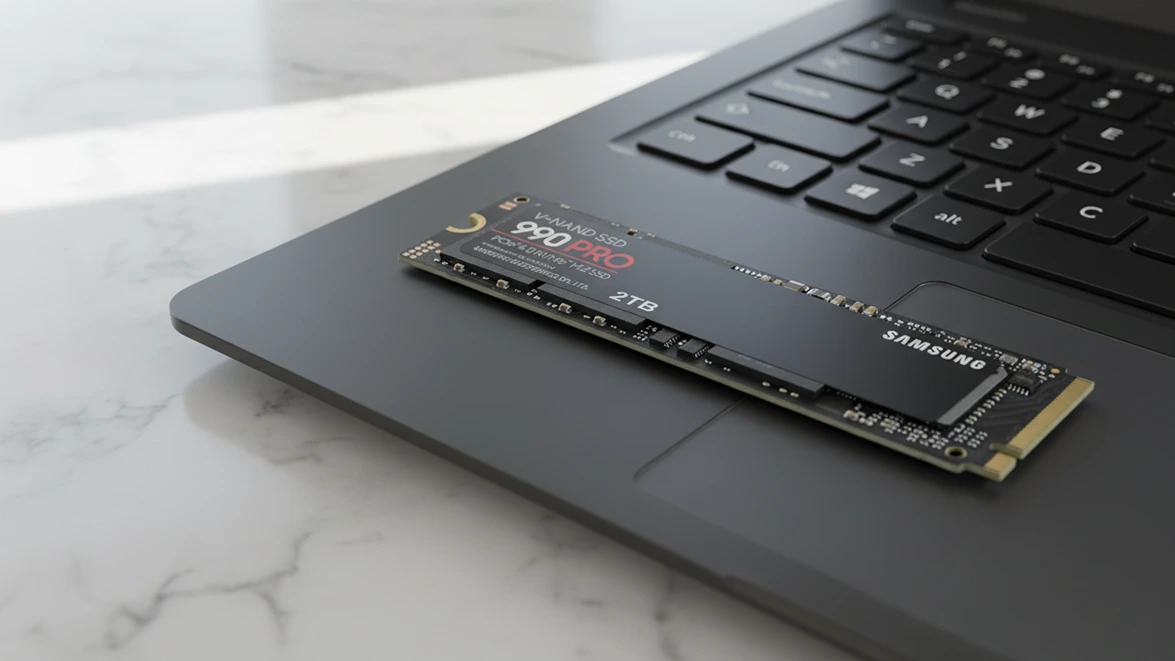
Professional creators requiring absolute data sovereignty often prioritize a high-capacity GPU workstation for speed while those operating on a strict budget find that a balanced system RAM configuration provides a viable entry point into local modeling. Establishing a functional baseline requires securing components specifically engineered to handle the massive data loads of modern machine learning. I suggest acquiring the Samsung 990 Pro 2TB to establish the mandatory storage speeds required for localized generation. For those ready to assemble the rest of their private computing architecture, you should review the technical breakdown on selecting the right motherboard and processing unit for artificial intelligence workloads.ware ownership. We hold the absolute power to dictate how these mathematical frameworks operate by physically hosting them on our own sovereign machines. The path away from corporate oversight begins the moment you decide to stop renting compute power and start building your own infrastructure. You have the knowledge required to break the cycle of algorithmic degradation permanently.