Personal information has become the most vulnerable asset in a digital world that never stops recording. Most people hand over their private thoughts to an application just to save a few minutes of scheduling or writing. Modern data protection steps, following these cybersecurity best practices, are the only way to prevent a total loss of digital autonomy in an era of constant monitoring.
Corporate entities prioritize the speed of an intelligent assistant over the privacy of the human user. This innovation forces your data off your hardware and onto a remote server where traditional encryption often disappears. Security-conscious individuals must understand that convenience always comes with a hidden cost to their identity.
Intelligent assistants record every private thought
Autonomous agents require unrestricted access to your files and messages to perform their assigned tasks. This massive data collection allows an assistant to predict your needs and answer emails on your behalf. These systems create a comprehensive summary of your life that exists entirely outside of your control.
Threat actors targeting these centralized summaries can gain a complete picture of your finances and habits. Recent breaches show that even the most advanced network infrastructure remains vulnerable to sophisticated hacking groups. You should review the modern encryption standards to see how your data transforms into unreadable code during a standard transfer.
Privacy standards struggle to keep up with the rapid pace of cloud-based processing. Most users do not realize that their “private” messages are being read and analyzed by an algorithm in real-time. This silent observation erodes the very foundation of end-to-end encryption that took a decade for the industry to build.
Convenience creates a massive security gap
Frictionless living remains the primary goal for most modern software developers. This focus leads to the removal of security prompts and verification layers that might slow down the user experience. People willingly trade their biometric data and location history for the sake of a slightly faster login.
The psychological desire for ease makes it difficult for consumers to recognize a predatory data policy. Most apps hide their harvesting practices behind long legal documents that no one reads before clicking accept. This lack of transparency allows corporations to monetize your behavior while you enjoy a free service.
Sacrificing privacy for minor benefits creates a permanent record that you can never delete. These records often move between different companies through hidden data-sharing agreements. Reclaiming your digital independence requires committing to modern data protection steps instead of chasing convenience.
Traditional encryption protocols face new challenges
Symmetric encryption uses a single key to lock and unlock your information at the source. This method works well for local files but often fails when an AI needs to process that data in the cloud. You must verify that your sensitive files remain in an unreadable format whenever they leave your physical hardware.
Asymmetric encryption utilizes a pair of keys to move information securely across a public network. This architecture allows two people to communicate without ever sharing a secret password. Modern hardware must handle these complex calculations to keep your identity safe from interceptors.
Hardware tools support personal information safeguards
Modern data protection steps increasingly depend on secure physical hardware, not just software, to keep your identity safe. Storing your passwords and encryption keys on a connected device increases the risk of a remote theft. Physical barriers remain the most reliable way to stop a digital intruder from accessing your life.
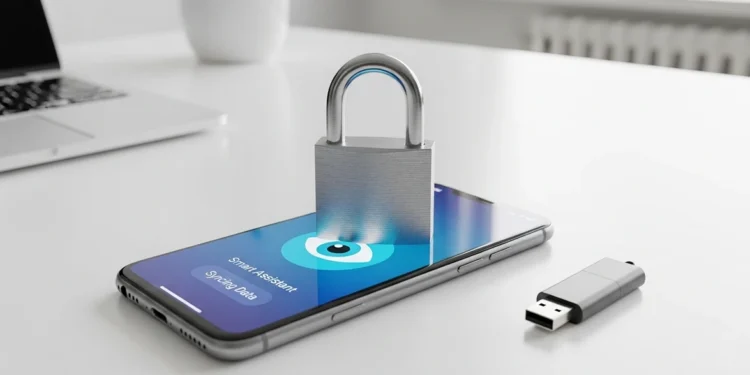
Using hardware encrypted thumb drives makes certain your most sensitive files stay off the public cloud. These physical units require a manual code to unlock and prevent any background software from reading the contents. Cold storage is the smartest path for anyone who wants to keep their financial records away from automated scanners.
Implementing physical security keys stops unauthorized logins even if a password leaks in a major breach. This hardware acts as a gatekeeper that requires a physical touch to verify your identity during a login attempt. Biometric data stays protected inside the key rather than being sent to a corporate database.
Digital privacy practices require a proactive mindset
Monitoring your home network for suspicious traffic is a basic requirement for digital safety. Bad actors use silent scripts to harvest data from smart home gadgets and unprotected computers. These threats operate in the background and often go unnoticed for months without proper oversight.
Deploying advanced data protection software helps you monitor for these silent background scripts before they cause a disaster. These tools alert you when an application attempts to access your microphone or location without your knowledge. Maintaining a proactive defense is the only way to stay ahead of the evolving threats in the modern market.
Identity protection depends on your willingness to adopt these modern data protection steps on a daily basis. Every small decision to limit data sharing adds a layer of safety to your digital footprint. Reclaiming your freedom starts with the hardware in your hand and the choices you make on your screen.