Hardware markets are currently dominated by predatory pricing and overblown marketing claims. Most brands expect buyers to drop a fortune on a name tag alone. The gigabyte rtx 5060 hardware value becomes the main story for builders who want technical utility without high-end debt.
Choosing a GPU in 2026 requires a cold look at the engineering under the shroud. The Blackwell architecture is the core of this unit. It promises higher efficiency, but the narrow memory bus remains a frustrating hurdle for high-resolution setups.
Blackwell engineering relies heavily on software to mask physical limitations. The GDDR7 memory is a significant technical shift for this tier. Bandwidth results are higher than older models, yet the 128-bit interface is a bottleneck that cannot be ignored.
Heavy textures in modern games will struggle on this narrow path. The card is clearly designed for 1080p dominance rather than 4K dreams. Expecting anything more is a recipe for technical disappointment.
Ray tracing outcomes for 2026 hardware often hide the physical bottlenecks of expensive units and technical data on whether ray tracing GPU results are actually visible helps expose the marketing hype.
WINDFORCE Thermal Mechanics and Shroud Quality
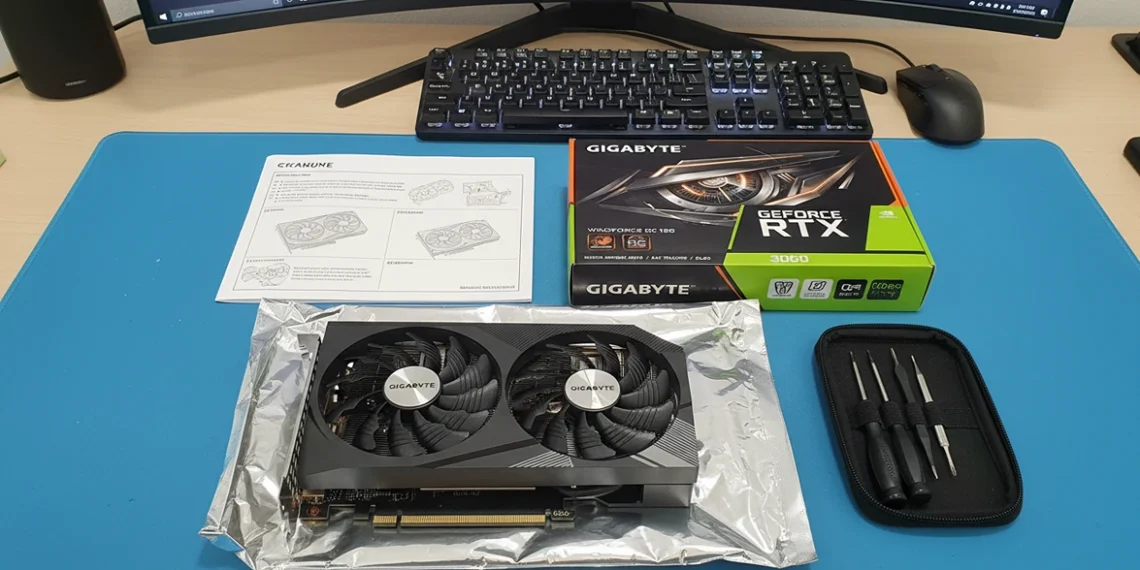
The plastic shroud on this unit feels remarkably basic in the hand. Manufacturers often cut costs on external materials to keep the entry price low. This industrial aesthetic might bother builders who want a showroom-quality rig.
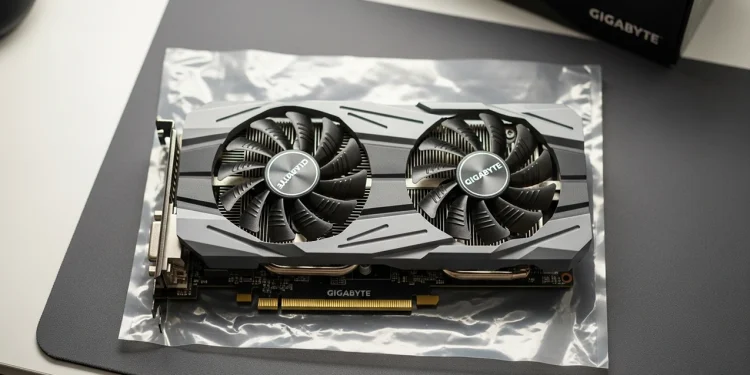
Dual blade fans rotate in alternate directions to reduce turbulence during heavy usage. The technical design handles heat well enough for standard gaming cases. But the noise levels spike when the hardware is pushed toward its thermal limits.
Small cooling fins and direct-touch copper heat pipes do the heavy lifting here. The thermal outcomes are stable but not impressive. It is a functional piece of gear that skips the bells and whistles found on more expensive models.
GDDR7 Bandwidth and PCIe 5 0 Engineering
PCIe 5.0 integration is a future-proofing win for this mid-range card. The interface doubles the available bandwidth compared to older system boards. This choice ensures the hardware stays relevant as newer motherboards become the industry standard.
Bandwidth spikes are handled with more grace thanks to the GDDR7 standard. Faster memory access translates to a smoother experience in competitive shooters. The lag spikes that plague older mid-range cards are less of an issue here.
DisplayPort 2.1 is another technical win included in this build. High refresh rate monitors require this standard to output 1080p at 360Hz or higher. The hardware is ready for the next tier of competitive gaming displays.
Hardware bandwidth on the GIGABYTE RTX 5060 WINDFORCE satisfies 1080p builds while the official documentation for the Nvidia Blackwell architecture identifies the technical limits found in recent hardware releases.
Eight gigabytes of memory is the absolute minimum for gaming in 2026. This capacity is enough for current titles, but the technical ceiling is approaching fast. Buyers should be aware that this hardware is a tool for today, not a decade-long investment.
Frame Generation Gimmicks and Software Weights
DLSS 4 is a primary technical pillar for the RTX 5060. The software uses AI to generate frames and improve visual results without taxing the core silicon. This engineering trick is the only way the card can maintain high refresh rates at 1440p.
Native resolution is always superior to upscaled graphics. The hardware lacks the raw muscle to run demanding titles at ultra settings without software help. This reliance on AI is a trade-off that savvy builders need to evaluate.
Latency remains a concern when frame generation is active. Technical users will notice a slight disconnect in fast-paced competitive environments. The software is a bandage for the physical hardware limits of the Blackwell chip.
Power Consumption and Electrical Outcomes
Energy efficiency is one of the few areas where this card truly shines. The Blackwell chip draws significantly less power than previous generations. This outcome allows for a smaller power supply and less heat buildup inside the chassis.
Lower power draw means the fans don’t have to work as hard during light tasks. The silent operation during web browsing is a nice technical win. It makes the rig feel more refined and less like an industrial heater.
Small-form-factor builders will appreciate the compact power profile. The hardware fits into tight spaces without creating a thermal nightmare. It’s a specialized fit for specific technical needs.
The Wallet Rule Evaluation for Gaming Rigs
Spending more money doesn’t always result in a better gaming experience. The diminishing returns on high-end GPUs are more aggressive than ever. This card respects the user’s money by providing exactly what is needed for 1080p success.
Price-to-utility ratios favor this unit over the more expensive alternatives. Most gamers never use the extra features found on high-end tiers. The RTX 5060 delivers the core experience without the unnecessary financial sting.
The gigabyte rtx 5060 is a technical win for 1080p setups, but technical facts on whether high end gaming video adapters are worth the cost expose the expensive trap most builders fall into when chasing flashy marketing.
The technical data is clear about where this hardware belongs. It is a solid tool for the mainstream market. If you avoid the marketing hype, you’ll see a card that does exactly what it says on the box.
System Compatibility and Hardware Mismatches
Pairing this card with an outdated CPU will create a massive system bottleneck. The PCIe 5.0 lanes require modern motherboards to reach their full technical speed. Hardware synergy is a requirement for getting the best results from this GPU.
Power supplies should be rated for at least 500 watts to ensure stability. The transient spikes on modern GPUs can trip older or cheaper electrical units. Technical stability is more important than raw frame counts.
The dual fan configuration is great for air-cooled builds. Liquid cooling this specific unit would be a total waste of technical resources. The internal design is built for simple, effective air flow.
The industrial build quality of the gigabyte rtx 5060 ensures it stays functional in dusty or hot environments. The technical engineering is honest about its mid-range goals. It provides a solid return for builders who want results rather than prestige.
GIGABYTE GeForce RTX 5060

GIGABYTE GeForce RTX 5060 WINDFORCE
The GIGABYTE GeForce RTX 5060 is a desktop graphics card equipped with 8 GB of GDDR7 RAM. It utilizes a PCI-Express x16 interface and provides both DisplayPort and HDMI outputs, supporting resolutions up to 7680×4320 pixels.
As an affiliate, we may earn a commission from qualifying purchases.
The NVidia graphic standards ensures that video adapters that uses its brand, such as the Gigabyte RTX 5060 can handle 1080p gaming needs efficiently while the technical data in the RTX 5070 hardware walkthrough suggests it’s a better fit for high resolution builds.