The Financial Friction Of Automation
Owning a premium robotic mower is sold as a way to permanently buy back your weekends, but the price you pay up front is only the opening move in a much longer financial relationship. The initial hardware cost is obvious; the quieter expenses—replacement blades, batteries, boundary repairs, connectivity upgrades, and the eventual push toward a newer model when support slows down—arrive in smaller, less visible waves. What looks like a one‑time purchase of a durable tool behaves more like an ongoing platform fee, with your yard as the justification for each new line on the balance sheet. If you’re already tracking household costs closely, this is the moment to ask whether you’re willing to treat lawn care as an active budget line instead of a solved problem.
That shift from machine to platform changes how the math feels once you step back from the brochure. A traditional mower, or even an earlier‑generation robot that ran mostly on local logic, had a predictable cost curve and a behavior profile that stayed put unless you physically changed something. This system layers cloud services, app logic, and policy decisions on top of the hardware, and those layers can all move without your consent. Before you commit, it’s worth deciding how comfortable you are tying your lawn—and a slice of your future spending—to a roadmap you don’t control, because the real purchase here isn’t just the mower; it’s the relationship that comes with it.
Superior Suspension Meets Broken Routines
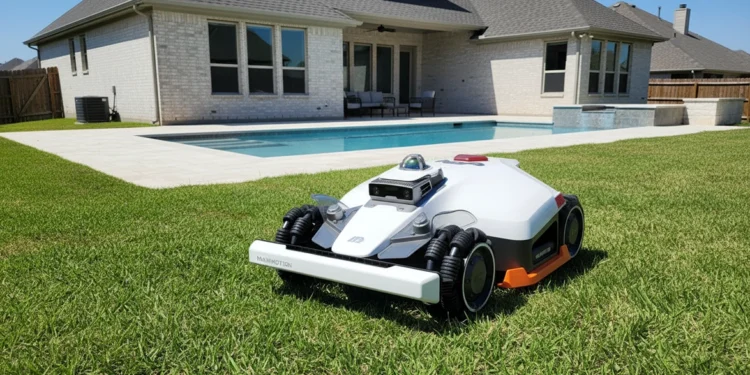
On the ground, this mower looks like the kind of hardware you could trust for years without thinking about it. The suspension stays composed over ruts, roots, and uneven patches that would have stopped older robots in their tracks, and the chassis feels more like a compact utility vehicle than a fragile gadget. Once you see it climb slopes cleanly and track rough terrain without drama, it’s easy to imagine your mowing schedule becoming a background process—something you set once and casually glance at rather than constantly manage.
The reality is that your routines still live downstream from software decisions that do not originate in your yard. A minor firmware change can tighten safety thresholds and suddenly classify familiar slopes as off‑limits, or adjust obstacle logic so that pockets of grass remain untouched where it used to cut clean. Cloud‑side tweaks to authentication, app flows, or scheduling rules can quietly transform a reliable start window into something you can no longer assume, pulling you back into monitoring duty simply to FOTA deployment reliability that the machine still behaves the way you expect.
Before you commit on the strength of the suspension alone, you need to decide which matters more in your situation: hardware that can physically handle your property, or a routine that will remain stable even when remote software priorities change. If you already know that you value predictable behavior over raw capability, this is the point in the decision where you pause and ask whether you’re prepared to let distant updates dictate when and how your “perfectly capable” mower is actually allowed to run.
The Rural Edge Case Owner
If you live on the rural or semi‑rural fringe, the mower’s promise collides quickly with the reality of your property lines. Your lot is bigger, your boundaries are stranger, and your trees, ditches, and outbuildings don’t line up with the clean shapes the marketing photos assume. The machine can physically traverse slopes, swales, and rough patches that would have humiliated older robots, but it’s operating inside a mental model of the world that was tuned for smaller, flatter, denser neighborhoods. From your side of the fence, it can feel like you bought into a system that understands lawns in general, but not your lawn in particular.
Underneath that mismatch is a stack of assumptions about connectivity and context that simply don’t hold once you get past the last reliable streetlight. The mower and its companion app expect stable Wi‑Fi, responsive cloud services, and GPS or mapping inputs that behave consistently; you may be dealing with dead zones, spotty broadband, and physical landmarks that confuse its guidance more often than the brochure implies. When scheduled runs depend on remote checks, or when error reporting leans on infrastructure you don’t have, the mower’s intelligence turns brittle. Instead of feeling like the ideal owner—plenty of land, plenty of grass—you end up treated as an edge case the platform was never RTK-GNSS signal range constraints.
Before you decide this is the right tool for your property, it’s worth asking whether you’re willing to live as that edge case for the lifetime of the hardware. If your connectivity is fragile, your boundaries unconventional, or your tolerance for unexplained failures low, this is the point where you weigh the appeal of automation against the reality of debugging a system that was optimized for someone else’s neighborhood.
Upgrade Risk For Existing Owners
If you already own an earlier model from this platform, the upgrade question isn’t as simple as replacing a worn‑out tool. Your current mower may miss spots, get confused in familiar corners, or struggle on certain slopes, but you understand those limits and have learned to work around them. The new generation dangles better traction, cleaner cuts, and more confident coverage as a way to finally “fix” those frustrations, yet it also represents a reset: you’d be trading a known, mostly predictable set of quirks for a more capable machine whose behavior will be shaped far more by ongoing software and policy decisions than by what you see on your lawn today.
Underneath that trade is a shift from a product that mostly behaves the same year after year to one that will keep evolving whether you want it to or not. Earlier models often leaned heavily on local schedules and simple rules; the newer ecosystem is tighter to the cloud, more automated, and more willing to change how it works in the name of safety, features, or compliance. Before you move, you need to decide whether you’re upgrading to solve specific, concrete problems or stepping deeper into a platform that will claim a bigger say in how and when your yard gets cut. If your existing setup is flawed but stable, this is the moment to ask whether the incremental hardware gains truly justify inviting ownership versus access trends into a routine you already know how to manage.
Deciding Whether To Commit Or Walk Away
For a first‑time buyer, the appeal of this mower shows up as a clean, almost seductive trade: you pay once, press a few buttons, and a recurring chore disappears into the background. On good days, that picture isn’t a fantasy—the machine glides across the lawn on its own, keeps the grass in a narrow band of “always acceptable,” and gives you back hours you used to spend behind a noisy deck in bad weather. The catch is that you’re not just buying a tool; you’re enrolling in a system whose rules, behaviors, and priorities can change without ever asking you what your weekend looks like. What starts as a simple time‑for‑money equation slowly turns into a question about how much of your routine you’re comfortable outsourcing to someone else’s decisions.
That’s the real fork in the path: committing means accepting that your yard’s reliability now depends on a mix of hardware durability and ongoing platform alignment, while walking away keeps the burden on your own effort but preserves full control. If you’re already stretched thin, the promise of regaining time may be worth the risk that updates, policy shifts, or ecosystem limits occasionally break your rhythm; if you’re more protective of autonomy than convenience, the idea of a network‑dependent mower dictating when your grass gets cut may feel like too high a price, no matter how capable it is. This is the moment to be explicit with yourself: are you trying to eliminate the labor of mowing at any cost, or are you trying to keep your yard in a state you control, even if that means doing more of the work by hand?
Closed Ecosystem And Automation Limits
Once you’ve lived with the mower for a while, it becomes obvious that the sharpest limits on what it can do aren’t mechanical; they’re ecosystem choices. The hardware could easily act as one node in a broader, smarter yard—reacting to your own weather station, cooperating with sprinklers, or respecting neighborhood quiet hours—but it’s deliberately fenced inside its own app, its own cloud, and a narrow list of approved accessories. Integrations with the rest of your home are shallow, data mostly flows in one direction, and anything that looks like real extensibility sits just outside what the platform encourages. You’re left with a open lawn automation standards on a very short digital leash.
Under that leash is a philosophy that prioritizes consistency and control for the vendor over flexibility for the owner. The company would rather guarantee a predictable baseline experience than expose the kinds of hooks that power users could bend into something more tailored, even if that means leaving obvious automation wins on the table. Schedules and “smart” modes are optimized for the median lawn, not your particular setup, and the system resists being treated as just another device in a stack you design yourself.
Before you sink deeper into this ecosystem, you need to decide whether you’re comfortable letting the platform define the ceiling for how smart your yard is allowed to be. If you’re content with polished presets and a closed loop, the constraints won’t bother you; if you see your property as something you want to orchestrate on your own terms, this is the point where you recognize that the mower’s real limitation isn’t what the hardware can do, but what the ecosystem is willing to let you try.
API Volatility For Long Term Ownership
The longer you plan to keep this mower, the more its behavior depends on invisible agreements that can change without your input. Firmware updates arrive on their own schedule, quietly tweaking how the machine interprets slopes, obstacles, and boundaries in ways you may not notice until a familiar pattern suddenly breaks. App revisions and backend changes can alter how schedules are enforced, how errors are handled, or which models get new features first, all without you touching anything physical on your property. Over time, you stop seeing the mower as a fixed appliance and start recognizing it as an endpoint in a system that is continually being revised somewhere else.
Underneath that experience is a kind of volatility that never appears on the spec sheet but dominates long‑term ownership. You’re not just betting that the hardware will survive years of weather and wear; you’re betting that the platform behind it will stay aligned with the routines you’ve built, the integrations you rely on, and the expectations you’ve set with everyone who lives around your lawn. A change that looks minor from the company’s perspective—a new safety rule, a different timeout, a retired integration—can ripple out into missed cuts, unexpected noise at the wrong hour, or entire zones that no longer get serviced the way they used to.
Before you commit to keeping this mower for the long haul, you need to decide how comfortable you are with the idea that its most important behaviors are governed by shifting policies and code you’ll never see. If the prospect of silent, mandatory updates deciding how your yard looks on Monday morning bothers you more than the effort of pushing a simpler machine, this is the point where you seriously question whether a network‑dependent mower belongs RTK fixed vs float of your long‑term lawn strategy.
Owning A Lawn On Someone Else’s Roadmap
Stepping back from the details, what this mower really sells is the chance to stop thinking about your grass as a manual chore and start treating it as something that just happens in the background. On its best days, the machine delivers exactly that: consistent cut quality, quiet operation, and a feeling that one more low‑value task has been permanently removed from your life. But every strength depends on a stack of assumptions—about connectivity, policies, safety rules, and business priorities—that you don’t control and can’t easily opt out of once the mower becomes part of your weekly rhythm.
That’s the decision sitting underneath every section of this article: whether you’re comfortable letting a changing platform sit between you and something as simple as a finished yard. If you’re willing to trade some autonomy, accept ongoing volatility, and treat lawn care as a relationship with a moving roadmap, this ecosystem can absolutely be worth the investment. If you’d rather your grass depend only on hardware you own and effort you decide to spend, the smartest move may be to walk away now—before your idea of what “normal” lawn care should feel like gets rewritten by a device that at its core answers to someone else.
Luba 3 Robot Mower
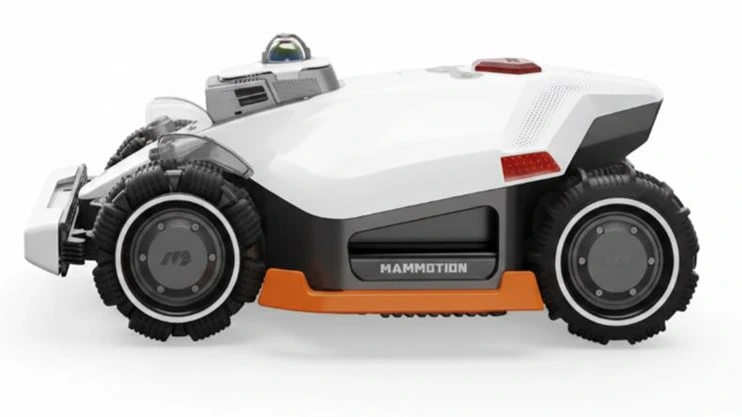
Mammotion Luba 3
AWD 3000 Robot Mower